
I can’t recall the context anymore, but when I was an adjunct at Utah Valley University back in the late-2010s, I noted the irony of how they’re still playing “YMCA” at LDS stake youth dances even today—which drew a bunch of blank faces from my students. “What do you mean?” they asked, sincerely confused.
“I mean, is it not common knowledge that the song is about gay hookups at the YMCA?” I responded with equally sincere confusion.
“WHAAAAT?!” they exclaimed, “But, isn’t YMCA short for like, some, Christian organization?!”
“Yeah, the Young Men’s Christian Association, that was the whole irony of the song,” I continued, trying not to sound patronizing (even wondering if they were in fact trolling me), “Gay kids back in the day would get disowned by their families and kicked out of the house when they tried to come out of the closet, and so they’d run away to the big city where no one knew them, and the only place they could afford to live at first was at the YMCA, so it quickly became known that if you wanted a gay hookup on the down low, just head on down to the YMCA, where there were scores of confused young men curious to experiment with their sexuality for the first time.”
“You can’t be serious—”
“YOUNG MAN,” I began to sing loudly, “THERE’S NO REASON TO FEEL DOWN, I SAID YOUNG MAN—”
“But that doesn’t inherently mean it’s about gay kids being kicked out—”
“YOUNG MAN, I WAS ONCE JUST LIKE YOU/I WAS DOWN AND OUT WITH THE BLUES/I FELT NO MAN CARED IF I WAS ALIVE—”
“But like, couldn’t that also mean, maybe…”
“YOU CAN GET YOURSELF CLEAN, YOU CAN HAVE A GOOD MEAL, YOU CAN DO WHATEVER YOU FEEL—” and I added in some hip gyrations to really drive it home.
“You’re making that up!”
“The Village People were named for Greenwich Village, a notoriously gay neighborhood in New York City. I mean, have you not seen pictures of the Village People before?”
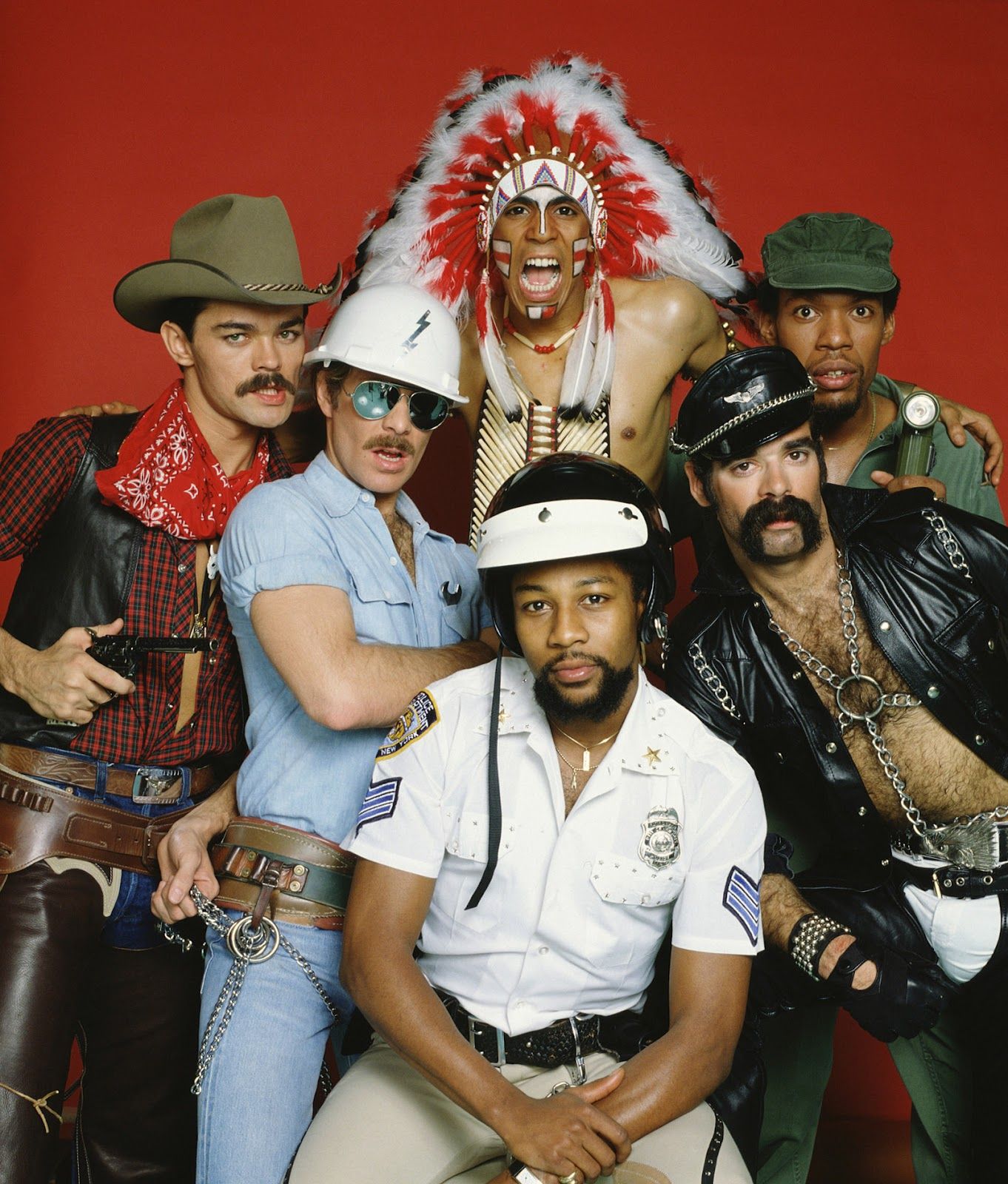
In short order, the entire class had whipped out their phones and were furiously googling pics of the Village People—including the original 1978 video for “YMCA”—and the classroom became a cacophony of students exclaiming in turn, “OH MY GOSH,” “Are you kidding me?” “And they play this at church dances!”
Indeed, they had been playing it at church dances when I was a kid in the late-90s, a thousand miles from Utah—and it was already considered an oldie even then. Somehow it had persisted at least another 20 years beyond then, in continual rotation by innumerable church-sanctioned DJs in multiple states, this happy little disco hit about the joys of experimenting with gay sex after you’ve been disowned by your family.
And I suppose I could just laugh at the naivety of those Utah Valley kids, but that’s actually not my purpose at all with this brief anecdote. (Certainly they aren’t any less naive than, say, a bunch of big, manly Pittsburgh Steelers fans belting it out during football games—or Americans proudly blasting “Born in the USA” on the Fourth of July—or newlyweds tenderly slow-dancing to “Every Breath You Take”). Rather, it’s to consider, if only briefly, how maybe there really was something genuinely holy and sacred about playing “YMCA” at stake youth dances all those decades, almost in spite of themselves—how it may not be sarcastic or ironic in the slightest that the song references first and foremost a Christian association—since it is a song that, no matter its peppy dance beat, is ultimately about expressing solidarity with those who have been despised and cast-off by the self-righteous.
As Paul also declared to the Athenians on Mars Hill, “Him whom ye ignorantly worship, declare I unto you.” And how ignorantly have we worshipped Him indeed, endlessly ignoring that He it was who intentionally broke bread and drank wine with the most cast off and despised of society—the lepers, the Samaritans, the prostitutes and the tax-collectors—not in spite of but because they were the most marginalized of society.
Indeed, these were the ones that the scrupulous religious leaders of His day most felt they had the most good reason to condemn and despise, openly and explicitly, rightfully and righteously. And I’m reminded of how the governor of Utah just this year has dropped off celebrating Pride month in June to jump on the conservative trend of renaming it “Fidelity Month”—not a bad thing to celebrate in a vacuum of course, but very much a farce in the age of electing serial-adulterers and child-rapists in high places.
Hence I nowadays have a stronger inkling of why He (also cast off and despised of men, with no beauty that we should desire Him) not only ate with the righteously hated in particular, but turned towards His much Holier and hallowed opponents and declared, “Behold, the prostitutes and the tax-collectors enter the Kingdom of God before you”—