
Alma 47 is the least marked-up chapter in my copy of the Book of Mormon, largely because it’s too depressing. The chapter follows the treacheries and palace intrigues of the Nephite dissenter Amalakiah, who, after shamelessly ingratiating himself with the Lamanite King, is sent with an expeditionary force to destroy an AWOL Lamanite unit led by a rebellious commander named Lehonti, who has (quite rationally) refused to continue this wasteful war against the Nephites. Amalakiah, however, directly disobeys his orders from the King, and instead uses a combination of charm, flattery, outright lies, and physical threats, to become Lehonti’s second-in-command. He then poisons Lehonti “by degrees,” so that he becomes head of the army alone.
Amalakiah then returns triumphantly to the Lamanite Royal Court, welcomed back personally by a grateful Sovereign, only for Amalakiah to brazenly stab the King to death in front of everyone; when the King’s servants then flee in terror, he immediately frames them for the murder. Turning back on the charm, he swiftly courts and marries the Lamanite Queen, thus consolidating absolute power over the Lamanites. He then promptly sets up towers throughout the land to deliver rabble-rousing anti-Nephite propaganda until he has the people whipped into yet another pro-war frenzy, and so sends them to invade and destroy the Nephite civilization–all while displaying a callous disregard for the lives of the Lamanite soldiers themselves.[1]All comparisons to our present moment are strictly intentional.
Overall, Amalakiah is presented as conniving, cruel, sociopathic, and narcissistic–that is, the polar opposite of Captain Moroni, he who waged only defensive wars, fought only for liberty, “did not delight in bloodshed,” always ended battles at the first hint of fear from his enemies and let all who surrendered depart with covenants of peace, and who sought “not for power but to pull it down.”[2]Alma 60:36 After reading about the treacheries of Amalakiah, it is always a relief to get back to Captain Moroni in Alma 48. Amalakiah is inarguably the main villain of the War chapters, and no one mourns his death (not even the Lamanites, apparently) when Teancum kills him in his tent with a javelin one night.
Of course, no one actually thinks of themselves as the villain; everyone is the hero in their own story, and I wonder sometimes how Amalakiah thought of himself as the hero of his own. Did he perhaps determine that the Nephites (as Grant Hardy has discussed) were unrighteous usurpers of the Davidic Throne of Israel, abrogating for themselves the Kingship that by rights belonged to the Mulekites who, after all, were the direct descendants from King Zedekiah? (Was that in fact the origin of the Kingmen in Alma?) Did he therefore perhaps consider the reign of the Judges to be illegitimate and blasphemous, since it granted to the unworthy masses the right to elect their own rulers, which only God can righteously do? What was next, people electing their own Prophets, too? Speaking of which: Were not these same Prophets constantly ignored by the Nephites anyways, who endlessly and impotently called them to repentance for their materialism, pride, and wealth accumulation—which the Nephites then hypocritically and sanctimoniously accused the Kingmen of doing?
Did Amalakiah therefore conclude that the Nephites were irredeemably wicked, hypocrites, liars, apostates, heretics, blasphemers, and thieves, and that therefore any degree of viciousness was justified to exterminate the even greater viciousness of the Nephites, who had robbed the Mulekites of their rights to the government? Did not the ends therefore justify the means?
That is, did Amalakiah perhaps start out as an idealist of sorts, one who sought power in order to rectify the perceived wrongs of his people, until at some point he came to desire power solely for its own sake?
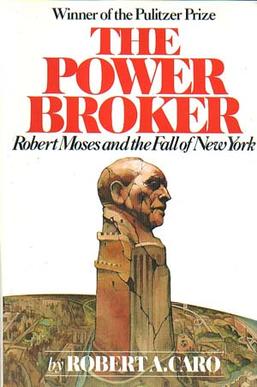
This is all speculation of course—but then, idealists becoming power-hungry villains really does happen. This idea has been on my mind ever since I started this year by tackling Robert A. Caro’s absolutely massive, 1,500 page, Pulitzer-prize winning 1974 biography The Power Broker: Robert Moses and the Fall of New York. Regularly ranked one of the greatest biographies of the past hundred years, it’s one of those books that political commentators like to display prominently on their office shelves during Zoom interviews (regardless of whether they’ve actually cracked it open or not). In this tour de force, Caro traces out the life and career of the famed urban-planner Robert Moses who, despite never once being elected to public office, carefully plotted and positioned himself to become by mid-20th century the single most powerful man in New York City, arguably even New York state.
All throughout this surprisingly engaging (and very well cited) narrative, Caro details all the palace intrigues by which Moses quietly seized control of previously-overlooked governmental agencies like the Parks Department and Bridge & Tunnel Authorities, and exploited obscure laws and loopholes—as well as pushed through innocuous-seeming new laws, right under the state legislature’s noses—until he was able to eventually consolidate power and bypass governmental checks and balances entirely, making himself the one indispensable man in the state. Administrations came and went, Republicans and Democrats traded electoral victories, economies boomed and busted, but for over forty years Moses remained untouchable. He was able to defy and outmaneuver multiple different Mayors, Governors, City Councilors, Assembly-men, and even President Franklin D. Roosevelt at the height of his popularity, who all tried and failed to oust him. Because of Moses, the faces of both New York City and Long Island county were transformed entirely–for better and for worse.
For what sets apart Caro’s biography is that it isn’t just some hatchet job: he really does give Moses all due credit for his legitimately impressive accomplishments and genius! Moses it was, for example, who almost single-handedly developed the public beaches and parks on Long Island still in use today, despite the combined resistance of the local Robber Barons and KKK-infested townships then in control of the island (that act alone endeared him to millions of urban New Yorkers desperate to escape the sweltering City during the Summer months, which bought him literal decades worth of public good-will that he exploited to the max); he was also able to bypass the decades-long corruption and graft of Tammany Hall, to engineer numerous public works projects in New York City all throughout the Great Depression, creating hundreds of thousands of jobs at a time when cities nationwide were languishing in mass unemployment and disrepair.
Even more impressively, Moses helped spearhead the gargantuan, game-changing Triborough bridge that connected together the Bronx, Manhattan, and Queens, the record-breakingly long Verrazzano-Narrows bridge that connected Staten Island to Brooklyn and the rest of the City for the first time, and numerous other City bridges besides. He similarly forced through the massive system of freeways, belt-loops, and Parkways that criss-cross New York City and Long Island even now.
Yet Caro also makes no bones about the fact that Moses evicted and displaced hundreds of thousands of poorer New Yorkers, and condemned and demolished hundreds of otherwise sturdy old tenement buildings, in order to build those same freeways and parkways; that some of his bridge expansions (he absolutely refused to build tunnels if he could help it) overshadowed and ruined what had previously been vibrant and prosperous neighborhoods; that he primarily just built city parks in the middle- and upper-class areas, conspicuously neglecting the Black and Puerto Rican ghettos that needed them most[3]There are anti-Robert Moses signs being waved by angry Puerto Rican protesters in the background of Spielberg’s recent remake of West Side Story.; that he set the public pool water to cooler temperatures because he believed people of color didn’t like the cold; that he purposefully built the overpasses on the Long Island parkways too low for a bus to get through, so that black people from Harlem (most of whom were too poor to own a car) wouldn’t even be able to charter a way to the beaches.
Caro likewise details how his imperiously car-centric urban planning and staunch opposition to public transit not only kept the poor intentionally isolated to the ghettos[4]Salt Lake City, incidentally, pulled the same stunt by making sure the I-15 walled off West Jordan from the rest of the Valley; though where do you suppose Utah learned it from?, but also ensured that the worst part of each day for even wealthy New Yorkers and Long Islanders would be those awful, traffic-jammed commutes; that despite ostensibly being pro-Park, he destroyed and paved over the last vestiges of old-growth woodland in New York City so that he could build all those freeways[5]There’s a reason why Caro subtitles his book “The Fall of New York.”; that he even tried to destroy Battery Park in Manhattan with a vanity bridge instead of a tunnel, and when he was successfully blocked for one of the only times in his life, he retaliated by destroying the only free, public Aquarium in New York.
Overall, Caro chronicles how Moses was vindictive, vengeful, arrogant, a bully, and willing to destroy the livelihoods of anyone who even accidentally got in his way–including his own brother, an otherwise brilliant engineer who died in penury; that as just one other example, Ole Singstand, the world-renowned tunnel engineer who designed the Lincoln, Holland, Battery-Brooklyn, and Midtown-Queens tunnels in NYC, was blocked from working any other project in New York state again after standing up to Moses once in the 1930s; that Moses played the Press like a fiddle, flagrantly lied to get what he wanted, and employed a private army of spies to dig up dirt on his opponents–or just straight-up smeared them in the Press if he couldn’t find any—and the rest he bribed into secret combinations; that he flattered and charmed allies when he needed them, then callously discarded them once he didn’t; that he showed gratitude to almost no one who helped him, not even his own wealthy and supportive parents[6]The sole exception was apparently Governor Al Smith, who gave Moses his second chance in government in the 1920s.; that he was rigidly classist and racist—an unapologetic elitist in the age of Woodie Guthrie—who treated the broader public more like an abstract mass to be processed rather than as real human beings with agency, needs, and desires[7]Hey, just like BYU-Idaho!; that he dismissed the human cost of all the lives he ruined by quipping “you gotta break some eggs to make an omelet,” all while assiduously assuring that it was never his own eggs that got cracked; that he constantly presented himself as a selfless public servant all while living in opulent luxury, commuting by yachts and limousines, and surrounding himself with servants, yes-men and sycophants; that after fearlessly denouncing the graft and corruption of Tammany Hall as an idealistic young man, he eventually came to collaborate with them directly, all while operating the most massively corrupt political machine of all.
And that last point gets at the heart of the matter for Caro: for when Robert Moses was a fresh young Yale and Oxford graduate in the 1910s, he appeared to have been animated by a genuine idealism, a sincere desire to serve the public good and make New York a better place to live in. Hence, he eagerly joined the incoming administration of a newly-elected, anti-corruption Mayor, as part of an army of committed young reformers seeking to dismantle the graft and corruption of Tammany Hall. Alas, the reformers’ bright idealism was immediately stonewalled by the bureaucracy of the long entrenched political machine, which had survived many such anti-corruption mayors, and would easily survive this one, too. Before that same mayor lost re-election, Moses would be out of a job as well, because he had failed to understand how power actually works in New York City.
Ah, but Moses learned from his youthful mistakes; in fact, as Caro might argue, he learned his lessons all too well. After that first sting of defeat, Moses realized that he couldn’t realize even his modest dreams of, say, building parks in condemned areas, or setting up baby-changing stations in what few parks the City did have, unless he similarly learned how to wield political power. So he learned it, and learned it well, and at a certain point began to wield power with even greater Machiavellian ingenuity than Tammany Hall could imagine.
And initially, according to Caro, that wasn’t necessarily a bad thing! Or at least, some of his ends could justify at least some of his means; he really was, again, able to pull off by hook and crook the monumental feet of building large public beaches on Long Island in spite of all moneyed opposition, as well as numerous parks within New York City itself. The massive bridges he got financed were genuinely impressive and necessary, too. But at a certain point, sometime in the 1930s, Caro maintains that Moses ceased to see power as a means to an end, but an end unto itself. He began to seize control of ever greater public works in New York not out of any nebulous sense of the greater good, but solely for his own self-aggrandizement, and there were none to restrain him.[8]Ether 13:31
It was a lesson Robert Caro had to learn too, albeit he arrived at a very different conclusion from his namesake Robert Moses. Caro’s superhero origin story is that while an idealistic young reporter for some Long Island newspaper in the ‘60s, he published a series of Op-Eds arguing against a proposed bridge across Long Island Sound, claiming it would require piers so large they’d disrupt tidal flows, that the environmental impact was too big, that it was opposed by the local communities in both Long Island and Connecticut, that it would be far too expensive, maintenance would be a nightmare, that there were other less-expensive in-land routes that could better alleviate traffic congestion from New England, and etc. The articles were well-received, and even Governor Rockefeller seemed persuaded by them; hence how crushing and disillusioning it was for Caro when the State Assembly voted to approve the bridge anyways. Why? Simply because Robert Moses wanted that bridge built.
“That was one of the transformational moments of my life,” Caro later told New York Times Magazine in 2012, “I got in the car and drove home to Long Island, and I kept thinking to myself: ‘Everything you’ve been doing is baloney. You’ve been writing under the belief that power in a democracy comes from the ballot box. But here’s a guy who has never been elected to anything, who has enough power to turn the entire state around, and you don’t have the slightest idea how he got it.'” He went back to college at Harvard for a Masters in Urban Planning, but found that, “Here were these mathematical formulas about traffic density and population density and so on, and all of a sudden I said to myself: ‘This is completely wrong. This isn’t why highways get built. Highways get built because Robert Moses wants them built there. If you don’t find out and explain to people where Robert Moses gets his power, then everything else you do is going to be dishonest.'” So, Caro applied for and received a research grant to write a book about Robert Moses. He budgeted nine months to finish it. He ended up taking nine years.
The resulting manuscript was a staggering million words long, absurdly hyper-detailed and rigorously cross-referenced, and which his publisher made him trim down to “only” 700,000 words, since that was the absolute extreme, outer limit for how long a trade book could be.[9]I came to better appreciate the succinct brevity of Alma 47. When Caro asked if maybe they could split it in two volumes, his publisher said he could get the public interested in Robert Moses once, but he could not possibly do it twice. Fortunately once was enough; and the ensuing sales and critical acclaim made the entire project worthwhile, which was especially fortuitous for Caro, because he and his wife had been forced to move into a cramped, ghetto Bronx apartment while he finished this Herculean task—all while Moses from his yachts and penthouses actively tried to squash the project, as he had done so many other attempted biographies before him. The Power Broker could have easily never been published.
But Caro wasn’t motivated to persevere against impossible odds by a desire to learn how to wield power for himself, no; like Captain Moroni, his desire was, again, “not for power but to pull it down.” He wasn’t here to celebrate Moses, but bury him. He was helped along by the fact that the rising of generation of urban planners and investigative reporters post-WWII began to speak out against Robert Moses as well, having witnessed first hand the human cost of his many vanity building projects, especially among poor people of color. Moses also started to get high on his own supply, his old political acumen began to slip, as he made multiple miscalculations that sapped his broader public support, like the financial boondoggle that was his unauthorized Worlds Fair of 1964, and getting in a fight with Shakespeare in the Park, attempts to pave over portions of Central Park.
At last Governor Rockefeller, who resented Moses’ power as much as his predecessors, smelled blood in the water (and as a scion of the filthy-rich and well-connected Rockefeller family, was perhaps the only man alive who knew how to wield political power as ruthlessly as Moses), and so made the dramatic move to finally freeze Moses out of power by creating the Metro Transit Authority (MTA) in 1968, to replace and take over the staggeringly corrupt Tribourough Bridge and Tunnel Authority (TBTA) that Moses had been running as his own private fiefdom for decades. (And as a final twist of the knife, Rockefeller slowly killed off the Long Island Sound bridge, too—doubtless to the relief of Caro.)
I had to look up that last fact repeatedly while I read The Power Broker. So many of Moses’ vicious and vindictive actions upset me (and my little book summary here scarcely even scratches the surface) that I often found myself having to lay down the book and re-skim the Wikipedia page on Robert Moses, to reassure myself that there was at least some smidgen of a comeuppance for this racist, classist, vindictive, hypocritical, arrogant bully. If he never even whiffed the possibility of going to prison for his many and flagrant acts of corruption (because he technically never did anything outright illegal–though boy, what a damning indictment of legality there!), I was at least gratified to see him finally stripped of his powers, beaten at his own game, and lose the esteem of the public–and moreover that his long overdue fall from grace all got covered in Caro’s book. The Power Broker, in fact, sealed the deal, and ensured that Moses’ reputation would be officially torpedoed within his own lifetime. Moses passed away less than a decade later in 1981, never again able to regain his precious political power, all in the painful knowledge that this massive exposé published about him had become a national best-seller and a Pulitzer-Prize winner, that he would ultimately be remembered not for his bridges and beaches,[10]And on a side-note: when I once visited Woodlawn Cemetery in the Bronx to pay my respects at the graves of Herman Melville, Celia Cruz, and Miles Davis, I made it a special point to ignore the grave … Continue reading but for this book that declared all his carefully hidden sins from the rooftops.[11]Luke 12:3
Nevertheless, it is still perhaps a touch unfair to compare Robert Moses to Amalakiah here; unlike the Book of Mormon villain, Moses in the early-going did sincerely complete projects that served the public good, even if only incidentally. And for as vindictive and power-hungry as he got later in life, he also never even tried to murder a soul that I’m aware of, let alone seize control of a country and wage an unjust war to exterminate an entire civilization. The difference between Moses and Amalakiah may be a difference of degree, not kind, but the difference between them really was immense. There really is such a thing as a lesser of two evils.
Yet still I feel like it really was just a difference of degree: both men, after all, made widespread use of public propaganda to manufacture consent, repeatedly exploited and betrayed their allies, made themselves more important than the lives they ruined, and if they had any sort of idealism when they started out, it was long gone by the time they seized real power. D&C 121:39 reads, “We have learned by sad experience that it is the nature and disposition of almost all men, as soon as they get a little authority, as they suppose, they will immediately begin to exercise unrighteous dominion,” and Robert Moses proves that verse right yet again, just as much as Amalakiah before him.
The story of Robert Moses, then, is an important and sobering corrective to me, quite frankly. I have spend a fair amount of time this past decade, you see, brooding over what works, and what doesn’t, in the political sphere. I find myself increasingly annoyed and disillusioned by all those performative protestors who make a big show about speaking out against corruption in high places, but then never take any steps to actually wield or seize power for themselves: either they don’t vote, or only protest on weekends (never week-days, when a general strike might actually cause some real economic pain for the powerful), or play purity politics to justify their inaction, or neglect to do anything that might actually risk their own physical safety, settling only for weak and self-righteous social media posts and so forth. These forms of virtue signaling are all of cold comfort to those languishing in Salvadorian prison camps, or terrorized and shot in the face by ICE, or trapped inside schools and hospitals bombed in foreign lands.
But even as I sincerely believe we must do more to take the power back, I also find myself reflecting on Amalakiah, and idealistic young Robert Moses, and a thousand other historical examples besides, who all demonstrate that once you believe that power is essential for accomplishing your goals, then power will swiftly become an end unto itself. Hence the old saying, “The road to hell is paved with good intentions.”
Power pursued and wielded for its own sake is also, per D&C 121:37, ultimately self-defeating: “That they may be conferred upon us, it is true; but when we undertake to cover our sins, or to gratify our pride, our vain ambition, or to exercise control or dominion or compulsion upon the souls of the children of men, in any degree of unrighteousness, behold, the heavens withdraw themselves; the Spirit of the Lord is grieved; and when it is withdrawn, Amen to the priesthood or the authority of that man.” The only honest desire in the end, is not to seek power, but to pull out down. Such is why the gates of hell would shake if more men were like Captain Moroni[12]Alma 48:17—or Robert Caro.
Hence, too, why Christ consented to be crucified on the cross. When given the choice between righteousness and political power, he chose righteousness–which ironically and paradoxically caused him to lay hold of the greatest power of all, the only power worth laying hold of, and which can only be wielded to serve others, without hypocrisy and without guile.[13]John 1:47
References
| ↑1 | All comparisons to our present moment are strictly intentional. |
|---|---|
| ↑2 | Alma 60:36 |
| ↑3 | There are anti-Robert Moses signs being waved by angry Puerto Rican protesters in the background of Spielberg’s recent remake of West Side Story. |
| ↑4 | Salt Lake City, incidentally, pulled the same stunt by making sure the I-15 walled off West Jordan from the rest of the Valley; though where do you suppose Utah learned it from? |
| ↑5 | There’s a reason why Caro subtitles his book “The Fall of New York.” |
| ↑6 | The sole exception was apparently Governor Al Smith, who gave Moses his second chance in government in the 1920s. |
| ↑7 | Hey, just like BYU-Idaho! |
| ↑8 | Ether 13:31 |
| ↑9 | I came to better appreciate the succinct brevity of Alma 47. |
| ↑10 | And on a side-note: when I once visited Woodlawn Cemetery in the Bronx to pay my respects at the graves of Herman Melville, Celia Cruz, and Miles Davis, I made it a special point to ignore the grave of Robert Moses, too. |
| ↑11 | Luke 12:3 |
| ↑12 | Alma 48:17 |
| ↑13 | John 1:47 |