
McCormack and Richard Tauber[1]John McCormack was a turn-of-the-20th century Irish tenor and opera singer famous on both sides of the Atlantic (he had dual U.S.-Irish citizenship). Tauber in turn was an Austrian opera tenor … Continue reading
Are singing by the bed
There’s a glass of punch below your feet[2]Often read as an allusion to the old comic Irish ballad “Finnegan’s Wake,” which includes the lyric: “A bottle of whiskey at his feet/And a barrel of porter at his … Continue reading and an angel at your head
There’s devils on each side of you
With bottles in their hands
You need one more drop of poison
And you’ll dream of foreign lands
When you pissed yourself in Frankfurt
And got syph down in Cologne
And you heard the rattling death trains
As you lay there all alone
Frank Ryan bought your whiskey
In a brothel in Madrid[3]Frank Ryan (1902-1944) was a prominent Irish politician and soldier, first associated with the IRA, before breaking off to form the Republican Congress. This association in turn led him to join the … Continue reading
And you decked some f*cking[4]Yet another reminder of our thoughts on swearing—and if you still don’t like them, a reminder that Pogues in Irish is short for póg mo thóin, literally, “kiss my arse”. blackshirt
Who was cursing all the Yids[5]And here’s that reference alluded to above about punching a “blackshirt” British fascist, one moreover shouting anti-Semitic curses (“cursing all the Yids”). The … Continue reading
At the sick bed of Cúchulainn[6]Pronounced roughly “koo-KOO-lin.” A mythological figure from Medieval, pre-Christian Ireland, a warrior demi-god who defended Ulster from foreign invasion. According to legend, when he … Continue reading
We’ll kneel and say a prayer
But the ghosts are rattling at the door[7]Again, to quote William Faulkner, the past isn’t dead, it’s not even past; and the ghosts of history continue to haunt us today.
And the devil’s in the chair
And in the Euston Tavern[8]A pun in London; if you want further ironies on top of all else we’ve mentioned so far, the Pogues themselves, despite presenting themselves as so aggressively, unapologetically Irish in music … Continue reading
You screamed it was your shout
But they wouldn’t give you service
So you kicked the windows out
They took you out into the street
Kicked you in the brains
So you walked back in through a bolted door
And did it all again
At the sick bed of Cúchulainn
We’ll kneel and say a prayer
And the ghosts are rattling at the door
And the devil’s in the chair
You remember that foul evening
When you heard the banshees howl[9]In Irish mythology, banshees are who howled when a close family member was about to pass away.
There was lousy drunken bastards
Singing “Billy in the Bowl”
They took you up to midnight mass
Left you in the lurch
So you dropped a button in the plate[10]Dropping a button onto the collection plate during mass, so that the other parishioners don’t notice that you’re broke, and have no coins to drop at all.
And spewed up in the church
Now you’ll sing a song of liberty
For Blacks and Paks and Jocks[11]Referring to immigrants to England from, respectively, the Caribbean West Indies, Pakistan and India, and Scotland. (The famous LDS Hyde Park Ward in London would be an excellent example of a ward of … Continue reading
And they’ll take you from this dump you’re in
And stick you in a box
Then they’ll take you to Cloughprior[12]An old, defunct 15th-century Church with a well-known graveyard in County Tipperary, Ireland. Perhaps for this reason, “It’s a Long Way to Tipperary” was a popular music hall tune … Continue reading
And shove you in the ground
But you’ll stick your head back out and shout[13]But even if he is buried in Cloughprior, he will still rise again–just as all of history will return, as it is returning now–just as all the dead will literally rise again in the Day of … Continue reading
“We’ll have another round”
At the graveside of Cúchulainn
We’ll kneel around and pray
And God is in His heaven
And Billy’s down by the bay[14]Opening track to the Pogue’s 1985 sophomore album Rum, Sodomy, & the Lash, produced by their fellow Irish-Englishman Elvis Costello.
References
| ↑1 | John McCormack was a turn-of-the-20th century Irish tenor and opera singer famous on both sides of the Atlantic (he had dual U.S.-Irish citizenship). Tauber in turn was an Austrian opera tenor popular during this same era. These musical cues firmly locate the setting for this song in the early-to-mid 20th century–which would be entirely consistent with the references to fighting “Blackshirts” in the second verse, a reference to the British Union of Fascists that rose to notoriety within the U.K. in the 1930s, but declined and disappeared entirely after Great Britain declared war on Nazi Germany.
Now it may strike the casual listener as just another flourish of Celtic sentimentalism for a 1980s Irish-themed Punk Band (seriously, Flogging Molly and Dropkick Murphys do not exist without the Pogues) to set a song clear back in the 1930s or ’40s. Since The Troubles were still raging in Northern Ireland at the time, didn’t they have more current events they could be referencing? But then again, I suppose that’s exactly it: it is a peculiarly American affect to assume that history is irrelevant towards understanding our present moment. Only in America does the phrase “It’s ancient history” mean “it’s irrelevant”; everywhere else, it means the exact opposite. So if frontman Shane MacGowan was writing a song about surviving the years of fascism at home and abroad in 1985, it was surely because he beheld how how those forces were rising to re-surge again (as we documented one recent Halloween season about a state-side Punk band from 1985). These times only feel unprecedented if you have no historical sense about you; nor is it an accident that we are actively discouraged from learning history. The inverse of “Those who don’t learn history are doomed to repeat it” is of course, “Those who don’t teach history intend to repeat it.” |
|---|---|
| ↑2 | Often read as an allusion to the old comic Irish ballad “Finnegan’s Wake,” which includes the lyric: “A bottle of whiskey at his feet/And a barrel of porter at his head”.
Finnegans Wake of course is also the title of Jame Joyce’s final and most notorious novel (likewise a product of the 1930s), whose closing sentence, “A way a lone a last a loved a long the” is famously finished by the first line, “riverrun, past Eve and Adam’s, from swerve of shore to bend of bay, brings us by commodious vicus of recirculation back to Howth Castle and Environs”. That is, Joyce’s most difficult book likewise expresses a cyclical view of history endlessly repeating itself. For that matter, the immense and intractable complexities of Finnegans Wake likewise express a literary labyrinth, as impossible to ever fully understand as it is to escape it–again, much like history itself. Arguably, even the Pogues’ throwback Irish folk music is a form of the past endlessly cycling back to the present. But then, do we believe all that differently? Do we not also believe that “the course of the Lord is one eternal round” (1 Nephi 10:19; Alma 37:12; D&C 3:2)? |
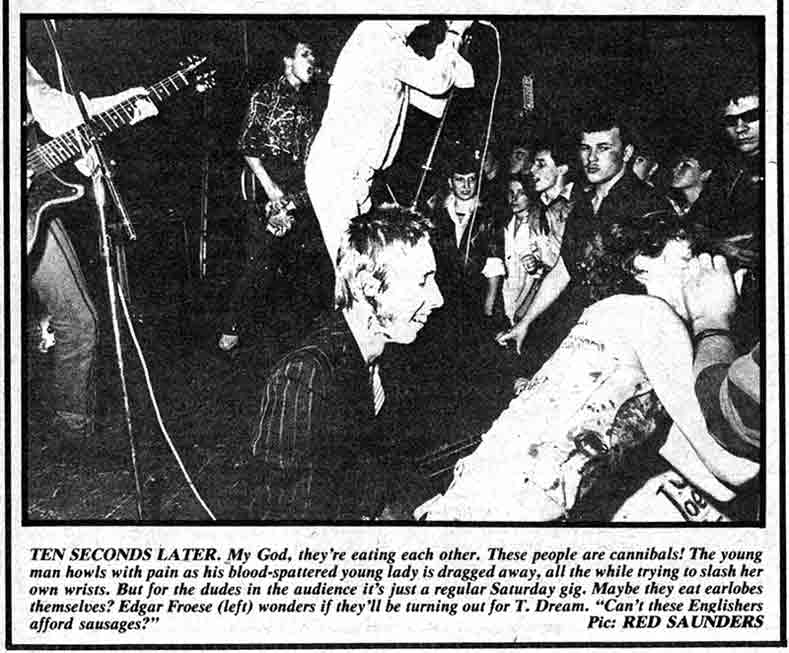
| ↑3 | Frank Ryan (1902-1944) was a prominent Irish politician and soldier, first associated with the IRA, before breaking off to form the Republican Congress. This association in turn led him to join the side of the Spanish Republicans against the fascists during the Spanish Civil War; hence the reference in this verse to Madrid–the fascist stronghold in Spain, as compared to revolutionary Barcelona–where he was in fact captured, arrested, and shipped off to Nazi Germany (hence also the references to the German cities of Frankfurt and Cologne), who tried to exploit him and the cause of Irish Nationalism to open up a second front against Great Britain, albeit apparently unsuccessfully. Ryan died of pneumonia in Dresden in 1944; his remains weren’t repatriated back to Ireland till 1979–the same era when a young, pre-fame Shawn MacGowan was photographed with a bleeding ear at a Punk show for The Clash. That is, none of this is very long ago; to quote William Faulkner, the past isn’t dead, its not even past. |
| ↑4 | Yet another reminder of our thoughts on swearing—and if you still don’t like them, a reminder that Pogues in Irish is short for póg mo thóin, literally, “kiss my arse”. |
| ↑5 | And here’s that reference alluded to above about punching a “blackshirt” British fascist, one moreover shouting anti-Semitic curses (“cursing all the Yids”). The narrator, like Captain Moroni with the Kingmen, treats the fascist the only way they deserve to be. |
| ↑6 | Pronounced roughly “koo-KOO-lin.” A mythological figure from Medieval, pre-Christian Ireland, a warrior demi-god who defended Ulster from foreign invasion. According to legend, when he was finally slain in battle, he tied himself to a standing stone so that he would die on his feet, facing his enemies.
Hence, it is deeply ironic that Shane MacGowan here refers to Cúchulainn’s sick bed, as though he never died gloriously in battle after all, but like Frank Ryan, only miserably of disease, far away from the battle-field. The irony is compounded when you recall that Ulster today is occupied by Northern Ireland, the only corner of the island to remain part of the United Kingdom after the rest of Ireland declared independence in 1922. |
| ↑7 | Again, to quote William Faulkner, the past isn’t dead, it’s not even past; and the ghosts of history continue to haunt us today. |
| ↑8 | A pun in London; if you want further ironies on top of all else we’ve mentioned so far, the Pogues themselves, despite presenting themselves as so aggressively, unapologetically Irish in music style and politics, were themselves founded in and based out of London–the heart of the British Empire. |
| ↑9 | In Irish mythology, banshees are who howled when a close family member was about to pass away. |
| ↑10 | Dropping a button onto the collection plate during mass, so that the other parishioners don’t notice that you’re broke, and have no coins to drop at all. |
| ↑11 | Referring to immigrants to England from, respectively, the Caribbean West Indies, Pakistan and India, and Scotland. (The famous LDS Hyde Park Ward in London would be an excellent example of a ward of Blacks, Paks, and Jocks, by way of reference.) As a post-colonial person himself, the narrator expresses solidarity with all the other post-colonial peoples of the world as well. This is a reminder for us to do the same, recalling that Christ himself declared to those found on his right hand at the last day, “I was a stranger and ye took me in…”
Try if you can to recall that this was also the name of a short-lived Syrian refugee-assistance program that the Church tried to launch in the October 2016 General Conference, via future apostle Patrick Kearon. To what I sincerely believe is our condemnation, the program died on the vine less than a year later–in no small part because the majority of U.S. Latter-day Saints instead voted for the candidate who ran on a platform of explicitly keeping out the Syrian refugees, by denying them all entry into the U.S. This same candidate is currently using ICE as his personal army to harass and violate the civil liberties of even legal residents and U.S. citizens within our country–all while waging an unprovoked war to distract from the Epstein files. All of which is but a reminder that it is absolutely vital that we stand with the immigrants and refugees of the world, lest we fall into and repeat the fascist tendencies of yester-year yet again. The Pogues were right. |
| ↑12 | An old, defunct 15th-century Church with a well-known graveyard in County Tipperary, Ireland. Perhaps for this reason, “It’s a Long Way to Tipperary” was a popular music hall tune during WWI–a reminder to the troops both of how long it would take them to return home, but also perhaps that only the grave awaited them after the war. |
| ↑13 | But even if he is buried in Cloughprior, he will still rise again–just as all of history will return, as it is returning now–just as all the dead will literally rise again in the Day of Resurrection. |
| ↑14 | Opening track to the Pogue’s 1985 sophomore album Rum, Sodomy, & the Lash, produced by their fellow Irish-Englishman Elvis Costello. |