
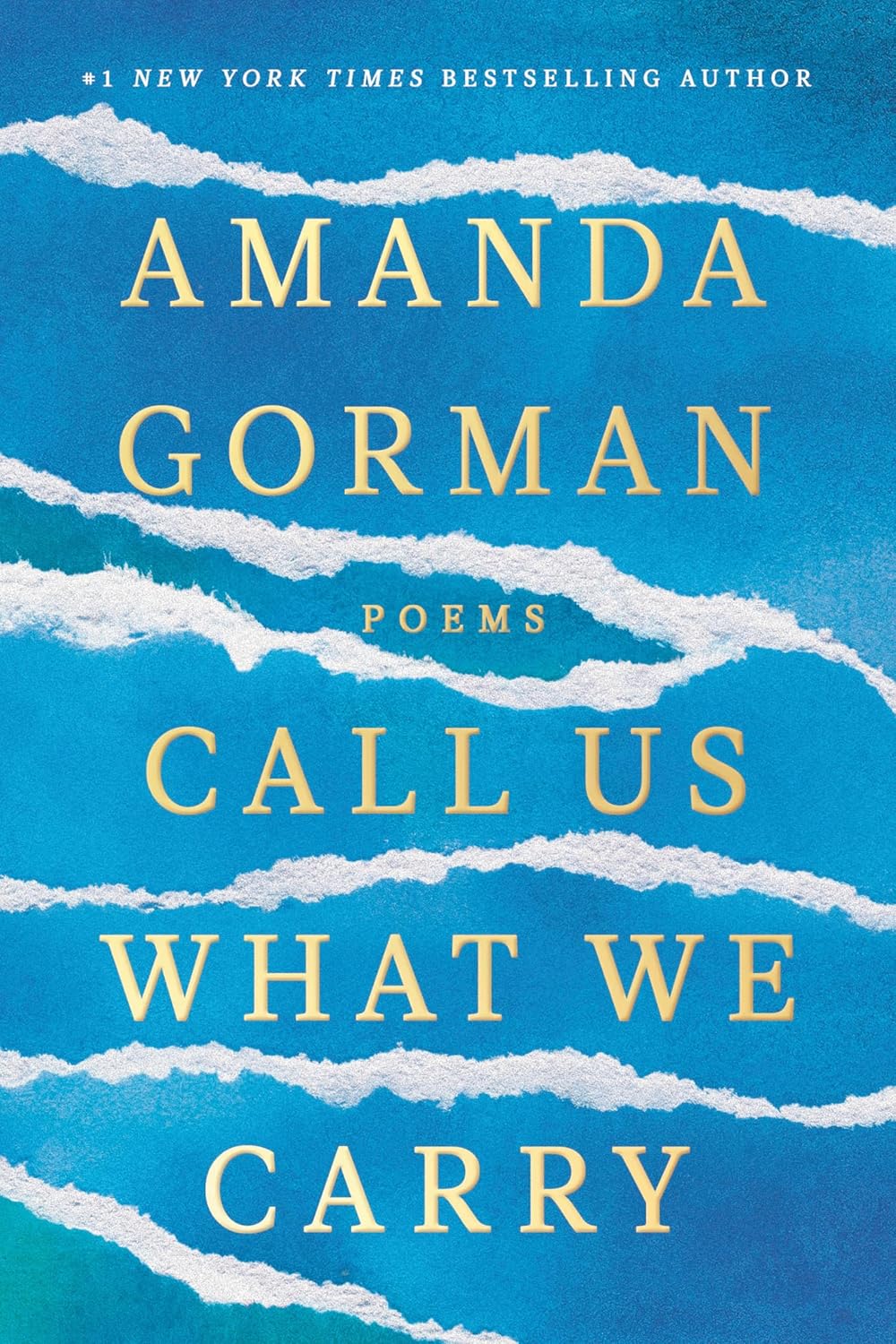
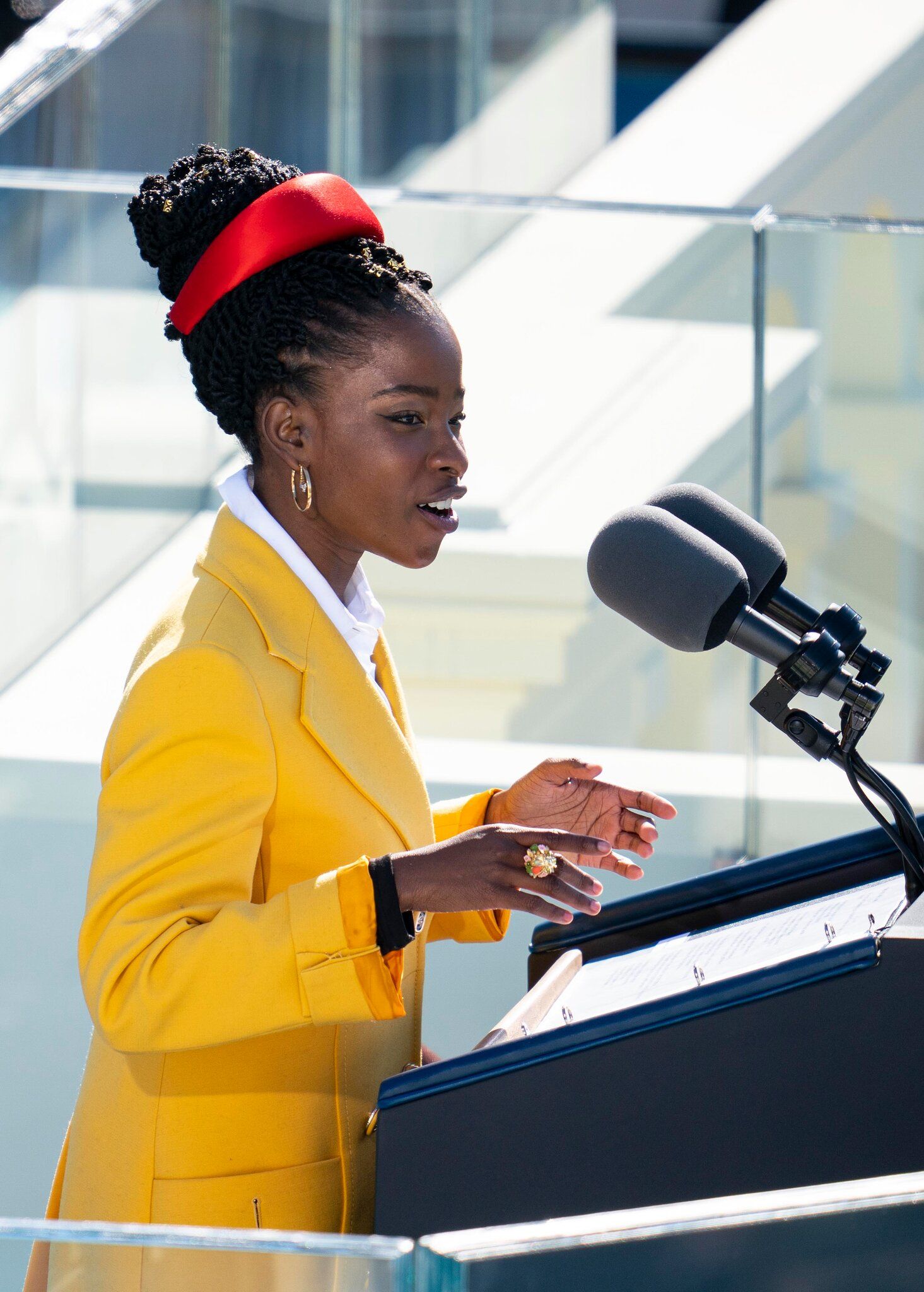
I’d been avoiding this book for the longest time (we definitely could have covered it when this site first re-launched in ’21). Her triumphant recital of her original poem “The Hill We Climb” at President Biden’s inauguration in 2021–all that promise, hope, and relief we felt, foolishly assuming the worst was finally behind us–now feels so heartbreakingly long ago that it now feels it might as well have never happened. But then, the same can be said of the pandemic.
This site has discussed before the mass short-term memory loss we’ve all collectively suffered concerning the COVID-19 pandemic–this, despite the fact that we are still dealing with the chronic labor shortages, the ensuing inflation, and an entire generation of students traumatized by their lost school year caused by the lockdowns—only a few short years later. Though, sadly, it’s not hard to understand why: In contrast to comparatively much smaller catastrophes like, say, 9/11, the 1.1 million killed in the U.S. by a plague could not be exploited by the military-industrial complex to justify foreign wars nor the erosion of civil liberties, and hence their memory was swiftly repressed. Thus we still keep on solemnly memorializing the 3,000 killed in 2001 every September a quarter-century later, all while the much-more-recently killed 1,100,000 are treated as an afterthought, all that suffering and trauma forgotten with a shrug, as though they never existed.
In this there was precedence: by all accounts, the Spanish Flu pandemic of 1918-1920 killed between 50-100 million people globally—roughly 5-10% of Earth’s entire population, or more than both WWI and WWII combined—yet the only literary references you will ever find to that catastrophe are on, say, page 2 of Mrs Dalloway by Virginia Woolf, and a stray reference in the short-story “A Good Man Is Hard To Find” by Flannery O’Connor. I took my comprehensive examinations on Modernist literature in 2015, and though I was drilled thoroughly on my knowledge of WWI, the Irish independence movement, the rise of automation and cinema, the collapse of the British and French empires, the Great Depression, the global rises in fascism and communism, and a thousand things besides, somehow the by-far-largest-catastrophe-by-body-count didn’t even come up once. My professors never mentioned it, and I never thought to study it. Didn’t even occur to us.
Amanda Gorman does however address the Spanish Flu in her full-length 2021 poetry collection Call Us What We Carry, and always does so in explicit comparison to the then-current COVID-19 pandemic. The Spanish Flu is in fact a border-line obsession for her; though it’s a good obsession to have! Better obsessed than passive; better anxious than amnesic. The book only finishes with “The Hill We Climb,” you see, as the hard-earned sliver of hope after waking through all the pain and anguish of the pandemic and the 2020 George Floyd protests and the centuries of American racism preceding it. Hers is not a naive hope, despite her young age; Moroni had written that “whoso believeth in God might with surety hope for a better world” (Ether 12:4) only after witnessing the utter collapse of his own nation, and Gorman shares that same world-weary yet divinely stubborn insistence upon hope.
Her poetry explores the intersections between anti-Black racism, the pandemic, and the ongoing climate crisis. Even in her youth, she correctly intuits that all the world-shaking events of 2020 would be swiftly lost, repressed, and forgotten, unless a record is kept. (The same raison d’etre as the Book of Mormon, incidentally.) This collection is her attempt to preserve just such a record.
There have been so precious few other examples—a single track off a Ben Folds album here, a latter-day Damon and Naomi record there—and how telling that it’s only been artists on the margins who have even attempted to memorialize the pandemic! Poetry, too, is a genre firmly on the margins nowadays, and has been for nearly a century now; how apropos, then, that a poet would also strive to keep a record (though at least this one was, however briefly, a New York Times #1 Bestseller).
Spencer W. Kimball purportedly once said that “remember” is the most important word in the English language, or even any language. It’s why we must take the sacrament each week, “That we might always remember”. The mass amnesia of the past five years has only proven the prophetic wisdom of his words once more.