
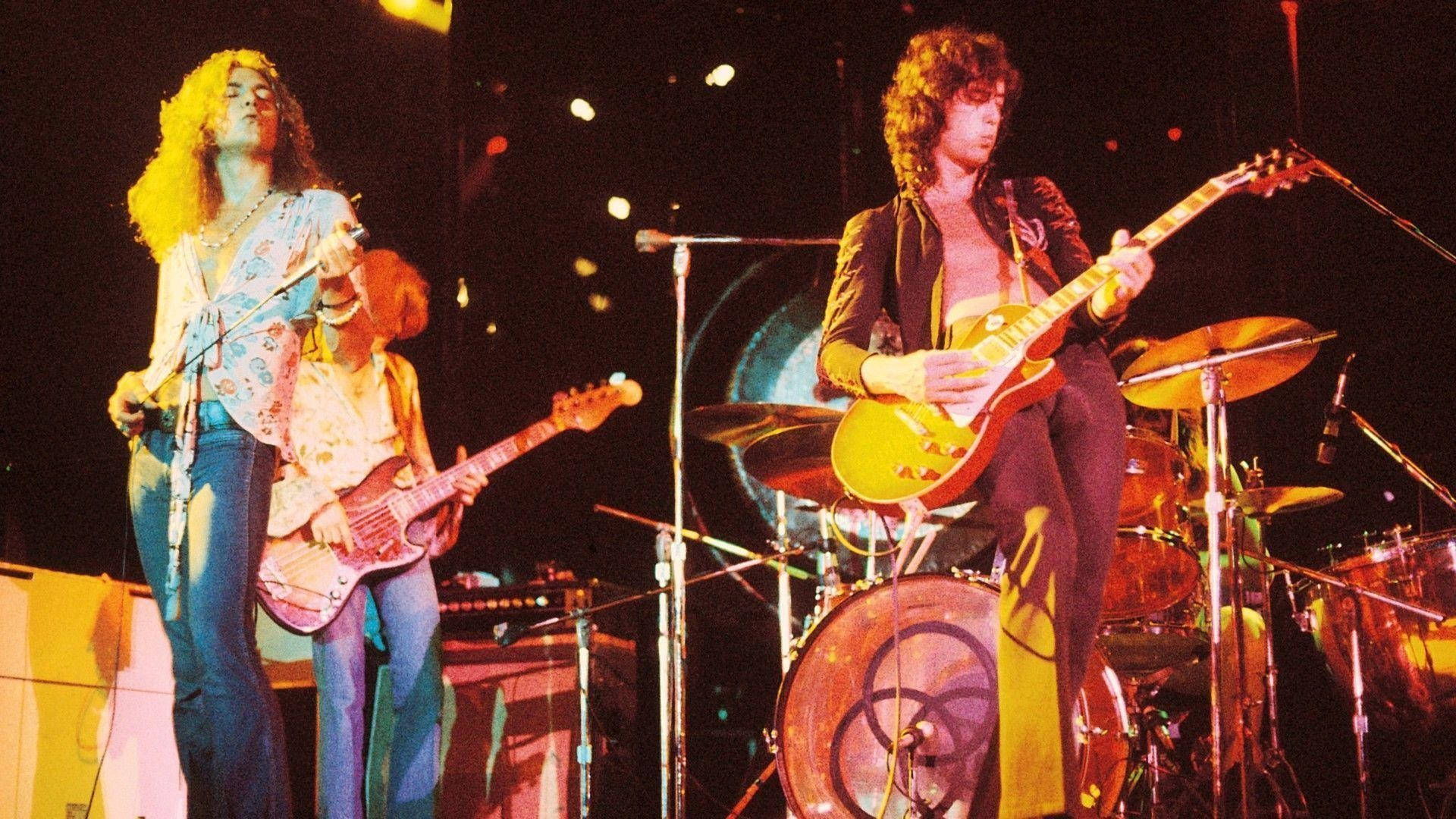
I was initially planning on doing some sort of Annotated Reading of Led Zeppelin‘s “Thank You” for Thanksgiving–largely because, unlike the Halloween and Christmas festivals it is wedged between, there is a serious dearth of songs even tangentially related to the holiday[1]and we’d already gleaned in years past from “Harvest Moon” by Neil Young, “Alice’s Restaurant” by Arlo Guthrie, “Macy’s Day Parade” by Green Day, … Continue reading.
However, listening to “Thank You” necessitated also listening to Led Zeppelin II; and even just briefly catching the opening riff to “Whole Lotta Love” made me realize I’d much rather be listening to the rest of that record instead. Seriously, the schmaltzy, out-of-place “Thank You” is by far the weakest track on II, which is otherwise either the dumbest-fun or funnest-dumb album of the late-’60s.
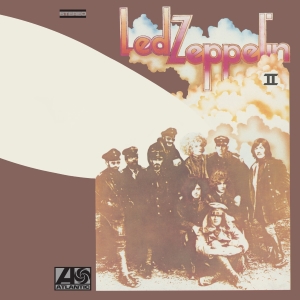
That was a line that Led Zeppelin at their best knew how to ride brilliantly. This site has discussed before the brilliant stupidity of the Ramones, but really, Led Zeppelin did it first. And it’s not just that they intentionally combined the brilliant with the stupid, but also the abased with the arrogant. As they had carefully learned from all those older Black Blues singers they’d clearly studied (and in some cases plagiarized)—and which all the later cock-rock bands who plagiarized them in the ‘80s largely failed to realize—swagger and cockiness only really work when they are rooted in humility and even humiliation.
Take for example “Good Times, Bad Times“, the very first track on their very first album, where we find the band had already perfected their formula of opening with the most basic, easy-to-mimic guitar-riff possible—daring you to follow along on your own guitar—only to then organically flow into one of the cockiest, most technically-proficient guitar-lines you’ve ever heard, all without breaking a sweat.
Yet even as the band performs the track with unapologetic swagger and mocks the attempts of everyone who was even briefly fooled into thinking they could keep up with them, what’s fascinating to note is how lyrically, Led Zeppelin on this track is thoroughly self-deprecating! This is a song after all about how his lover left him for a “brown eyed man,” about how “It only took a couple of days ’til she was rid of me,” of how “when I whispered” sweet nothings in her ear “I lost another breath.” Overall, when he was taught “In the days of my youth…what it means to be a man,” the clear implication is that the lessons didn’t take, that he feels just as ignorant now as when he was young—as shown by the fact that he’s still stupidly professing his love to this same chick in the outro. With only a slight shift into a minor key and a slower tempo, this could’ve easily been a low-down and depressing Blues number. When they named their opening track “Good Times, Bad Times,” implicitly these poor knuckleheads have had far more of the latter than the former–but as in “there must needs be opposition in all things,” only in the bad times can they have the good ones.
Heck, that all is the theme too of “Heartbreaker,” the track that immediately follows “Thank You” on Led Zeppelin II (and is also why “Thank You” suffers in comparison). As with “Good Times, Bad Times,” the track once again opens with one of the easiest, most inviting, yet still most swaggering and recognizable guitar lines in Rock—among the first riffs that beginning guitarists everywhere learn to pick out—only for Jimmy Page to then insert at the bridge one of the most shockingly difficult and inventive guitar solos of all time, just to mock us some more.
But once again, though the song itself positively drips with bravado and confidence, lyrically the track is about, well, a heartbreaker: some young filly named Annie who is “back in town,” is looking as hot as ever, and is as ready to break as many hearts as ever; implicitly she is either a hooker or a gold-digger driving the men to foolishly “lay their money down”—including the singer himself, who is one of those suckers who fell for her over “ten years” earlier, costing him “The best years of my life” and leaving him “alone and blue”. Even when she consents to hook up with him again (I’m guessing for old time’s sake?), she only humiliates further, as Robert Plant belts out at the top of his lungs, “why you call me by another guy’s name/When I try to make love to you?” In classic Led Zep fashion, he brags about getting laid in the exact same moment he complains about getting embarrassed in bed. Once again, he finds his exaltation only in his abject humiliation.
Repeat this exercise with that swaggering, swingin’ jam about getting repeatedly dumped “How Many More Times,” or the strutting baseline in that break-up song “Dazed and Confused,” or that cock-sure, cool-as-hell anthem of self-flagellation “Nobody’s Fault But Mine,” or that proto-Punk pump-up track about failing to woo your crush “Communication Breakdown,” or that rabble-rouser about how you “can win the day/Despite of all your losing” called “Immigrant Song,” or that awe-inspiring epic about being lost and ignorant in a wasteland “Kashmir,” or the braggadocio of being “down and out” in “Black Dog,” or that feel-good reggae song about begging your lover not to leave you “D’yer Mak’er,” or how “The Ocean” has lost its way, or warning of what’ll happen “When the Levee Breaks,” or even their most overplayed track of all “Stairway to Heaven,” about someone who thinks (like far too many of us apparently think) that she can actually buy her way into heaven, the one thing you absolutely cannot do, and therefore the one strategy most doomed to failure. In each of their most beloved tracks, it is in their frank confessions of failure (the first step in the repentance process, remember) that the members of Led Zeppelin are able to achieve their greatest heights.
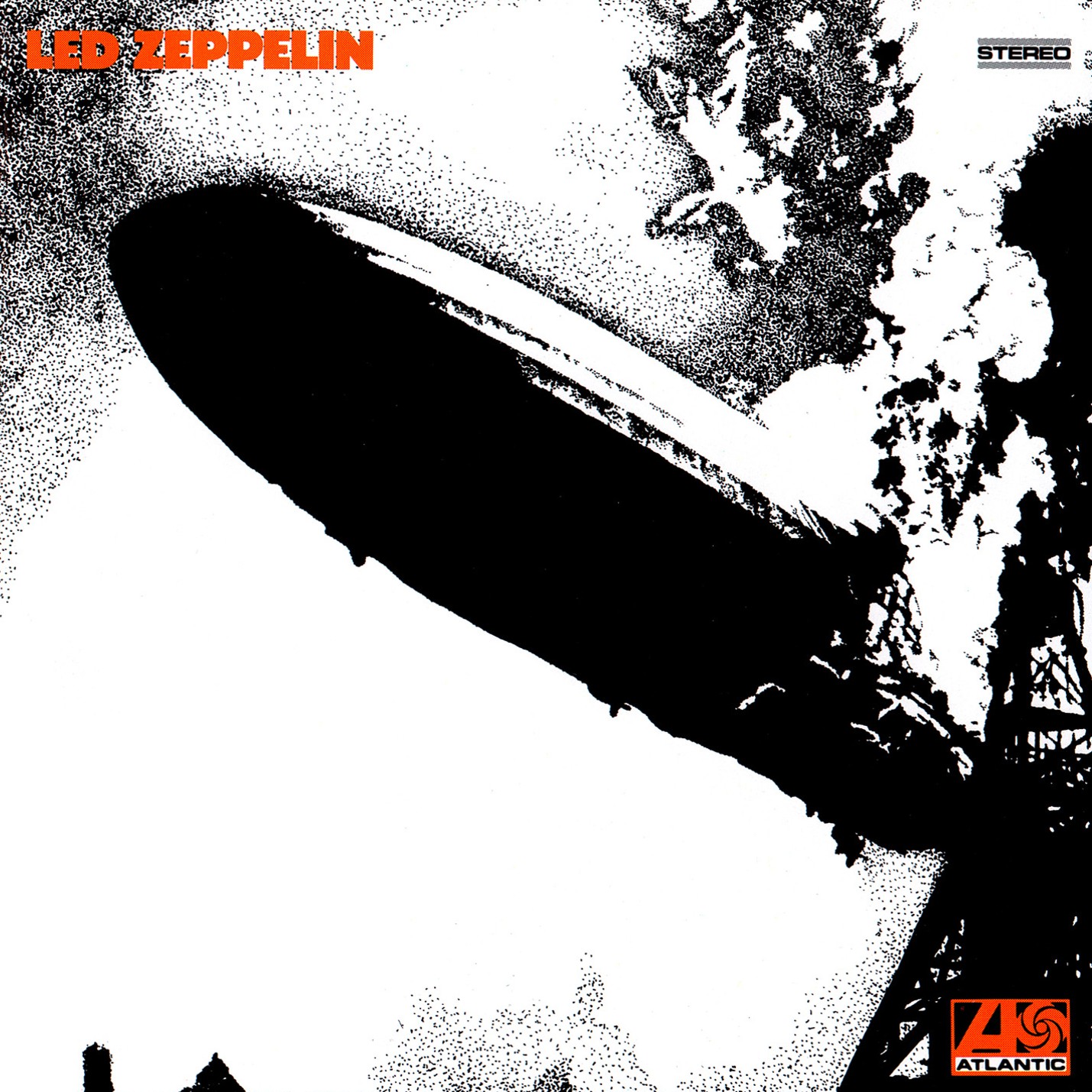
I mean, their band name was Led Zeppelin, for Pete’s sake: something large and majestic that crashes down disastrously back to earth. Their first album cover features the Hindenburg disaster for good reason. They knew what they were doing.
And at the risk of blasphemy in connecting this decadent and immoral Rock Band to the gospel of Jesus Christ (though Christ Himself is who drank wine with the prostitutes and the tax-collectors, “for the healthy need no physician, but they that are sick[2]Matthew 9:12”), everything we’ve mentioned thus far is of course a gospel principle: that the first shall be last and the last shall be first[3]Matthew 20:16; how whosoever shall abase himself shall be exalted[4]Matthew 23:12; how the rough places will be made smooth, the crooked places made straight[5]Luke 3:5; how we are “less than the dust of the earth”[6]Mosiah 4:2 yet also “the worth of souls is great”[7]D&C 18:10; how Moses himself learned “for this cause I know that man is nothing, which thing I had never before supposed,”[8]Moses 1:10 yet also learns in that same chapter “This is my work and my glory, to bring about the immortality and eternal life of man”[9]Moses 1:38; that Christ Himself “descended below all things,”[10]D&C 122:8 but now sits on the right hand of the Father[11]1 Peter 3:22. In all things, we repeatedly learn to be grateful for our abasement, for only in that can we find our exaltation.
So I guess I ended up writing about Thanksgiving after all.
References
| ↑1 | and we’d already gleaned in years past from “Harvest Moon” by Neil Young, “Alice’s Restaurant” by Arlo Guthrie, “Macy’s Day Parade” by Green Day, and even “Thank U” by Alanis Morrisette |
|---|---|
| ↑2 | Matthew 9:12 |
| ↑3 | Matthew 20:16 |
| ↑4 | Matthew 23:12 |
| ↑5 | Luke 3:5 |
| ↑6 | Mosiah 4:2 |
| ↑7 | D&C 18:10 |
| ↑8 | Moses 1:10 |
| ↑9 | Moses 1:38 |
| ↑10 | D&C 122:8 |
| ↑11 | 1 Peter 3:22 |