
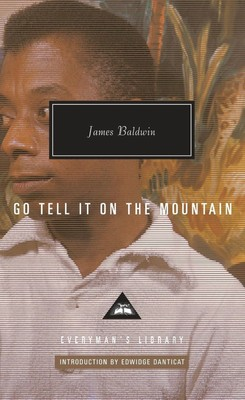
(Coincidentally connecting together the passions of both Juneteenth and Fathers Day weekend.)
It is a fatal flaw to assume that a story must be “relatable” to be worthy of your attention. If all you ever get from your readings are what you personally “relate” to–that is if, in the words of Simon & Garfunkel, you only hear what you want to hear and disregard the rest–then you are actively impeding your ability to ever learn something new, to grow in knowledge and understanding, and such is the literal state of damnation. The value of reading stories and novels isn’t in gleaning what you can personally “relate” to, but precisely in confronting those things that are alien and foreign to your own lived experience. Everyone despises the tourist who complains about how the food is unfamiliar, the language new, and the roads paved differently, from the ones back home; yet how many readers will only ever engage the parts of a novel that only tell them what they already know. You might as well never read a new book at all–just as the complaining tourist might as well just stay home–if you’re never going to have a sense of adventure about it.
Hence I feel no shame whatsoever in confessing that James Baldwin‘s career-making, 1953 debut novel Go Tell It On The Mountain is wildly foreign to my own lived experience. That was the entire appeal to me. I am not Black, nor was I raised Pentecostal, nor have I ever lived in Great Depression-era Harlem, New York. I’m just a white Mormon dude from out West; hence, despite the fact that both Baldwin and I are nominally fellow Americans, our lives and upbringings were so utterly different from each other that we might as well have been raised in different countries. Moreover, when this novel was published, Black people like him had been restricted from Priesthood ordination in the Church of Jesus Christ of Latter-day Saints for a solid century (the Priesthood ban began in 1853), a disgraceful state of affairs that would not get overturned for another 25 years. Not that the Mormon faith was of the slightest concern to James Baldwin; when he was a Depression-era boy-preacher in Harlem himself, the goings-on of a small regional sect 2,000 miles west of him did not impact him in the slightest, and so quite naturally makes no appearance whatsoever in his debut novel. (If he was aware that this same sect was then denying Black people the Priesthood, well, Black Americans were being denied a large amount of other things too–decent jobs, fair wages, fair housing, voting rights, basic humanity and dignity–that were of much more immediate interest to him; the Mormon Priesthood was frankly far down the list of pressing grievances for him.) It was the fraught vagaries of the Black Pentecostal experience in post-Reconstruction America that most influenced and defined his earliest waking moments, and so that was what he wrote about.
And that was the whole reason I picked up Go Tell It On The Mountain in the first place. Besides regularly getting listed in all those various “Best 100 American Novels of the 20th Century,” I read Baldwin’s first novel because I felt like I hadn’t read enough about the Black Church experience in America specifically–something I had very little direct experience with–a blind spot I needed to rectify. I wanted to get beyond the flat, shallow, pop-cultural cliches and stereotypes of the clapping Black choir and what have you, and instead see how they see themselves. We get irritated when folks presume to assume they know exactly what Mormons must think and feel without ever bothering to ask us directly, hence it is only just that we extend the same courtesy to others. Hence again, it was precisely the book’s foreignness, those things that I couldn’t immediately relate to, that most attracted me.
And yet, and yet. Despite being so utterly alien and distinct from my own comparatively privileged upbringing, I still found myself strangely relating to it, almost in spite of myself. The central character, you see, is a young boy named John on the morning of his 14th birthday. Like Baldwin himself was, John is being raised to be a boy-preacher in the local Church, where his parents are very active. He feels immense pressure, from both his family and his faith-community, to live up to his “calling,” to forsake the wicked ways of the “world” like so many of his peers have succumbed to, and instead seek for the things of a better. He’s obedient to his parents (even when his father is being emotionally withholding and verbally abusive) and does his chores without backtalk, yet all the while he is increasingly brooding about his place in the world. He is simultaneously plagued by doubts as to whether he is good enough or righteous enough for his calling, but also as to whether his Father–both earthly and heavenly–even love him, or if his faith is rooted in anything real in the first place. That is, he fears both that God isn’t real and that God is real–and both possibilities deeply disconcert him.
And my word, despite how sincerely I was trying to learn from the parts of the novel I had no prior experience with, I still couldn’t help but relate to that.
Because how often was I taught in Sunday School growing up in the LDS faith that my generation was among “the noble and great ones,” the most righteous of those in the pre-existence called to be “in the world but not of it” (a line that appears nowhere in scripture, by the way), Saturday’s Warrior saved especially for these latter-days to prepare the Earth for the Second Coming of our Lord and Savior Jesus Christ? How many adults did I hear in Fast & Testimony meeting back in the ’90s proclaim that they were convinced my generation would behold the face of the Lord Himself in the flesh? How often was I solemnly lectured on the sacred responsibility of the Priesthood ordination while still in middle-school? And how often were we pointed towards the Temples of Utah (I wasn’t even raised in Utah, by the way) as literal fulfillment of Isaiah’s prophecy that “in the last days, the mountain of the LORD’S house shall be established in the top of the mountains, and shall be exalted above the hills; and all nations shall flow unto it,” and that we were the Chosen Generation assigned this great work?
These questions became especially fraught for me personally, because my mother struggled with infertility throughout the first eight years of my parent’s marriage. Hence, when I was finally born in the ’80s, mine was hailed as a miracle birth (with overt comparisons to the prophet Samuel in the Old Testament), one clearly destined to lead quorums and build the Kingdom of Heaven upon the Earth. The pressure to live up to some imagined, impossible standard of righteousness–such that every time I let slip a swear-word, or had a wet dream, or watched an R-rated film, I was plagued with guilt–was absolutely staggering upon not only my generation entire, but on me personally, individually, the implicit chosen child. I suffered from the unbearable weight of living in the Chosen Generation. I had nowhere near the unprivileged upbringing of James Baldwin describes in Go Tell It On The Mountain, but when he presented the immense pressure that John the boy-preacher was under from his faith community while still only in his early-teens, I found him almost uncomfortably relatable.
(Seriously, when Church leadership began saying all the exact same things to the Gen Zers and Gen Alphas, I wasn’t annoyed like some of my Millennial peers were, no–I was relieved. It finally took the pressure off me. And if any Gen Zers and other youngins out there are now feeling the unbearable weight of being the Chosen Generation, don’t worry, just wait!)
Yet what is also curious to note is that, although the real-life James Baldwin refused to follow the path of a preacher laid out for him, and though Go Tell It On The Mountain overall is absolutely saturated with examples of religious hypocrisy, viciousness, and cruelty, it does not actually come off as an anti-religious hatchet job at all. His goal here is not to bury the Black Church, but to explore it. Critics remain divided to this day as to whether the novel is “an ironic indictment of Christianity” or a “stirring vindication”. Baldwin neither seeks to convince people to leave the Church nor to celebrate it, but to meditate upon it–because when religion causes suffering, Baldwin accurately intuits that such is a feature, not a bug, of faith.
After all, Christianity in general (of which our Church is emphatically a part, despite what many Pentecostals would say) is about the literal Son of God, the definite Chosen One, being tortured to death in the most distressing manner possible–and we are all supposed to follow his example. Joseph Smith was shot–as was Malcolm X and Martin Luther King, Jr.—for their beliefs. The Saints under Brigham Young (who started that pointless and awful Black Priesthood ban in the first place) fled to Utah under the most oppressive poverty and threats of mob violence. These are not failures of religion, but fulfillments.
So I guess the thing that I distressingly relate to the most about Go Tell It On The Mountain, is that he takes his childhood faith whole, without judgment, warts and all. I have had to do the same growing up.