
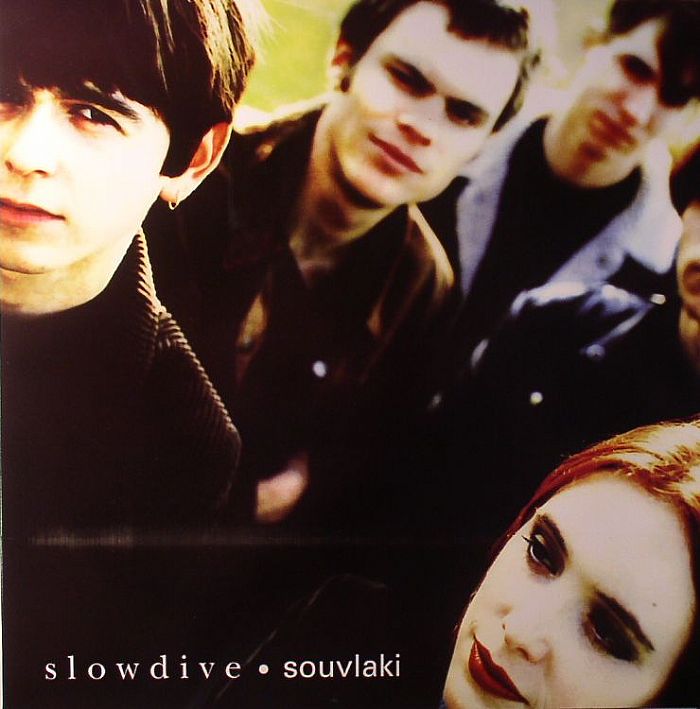
Late last semester, I spied a working-class community college student from the greater New York metro area sporting a Slowdive Souvlaki t-shirt–and that not too long after a Pakistani-American student at that same college argued with me as to which was the best Cocteau Twins[1]And yes yes yes, we’re fully aware that Cocteau Twins is perhaps more precisely classified as Dream Pop than Shoegaze, but let’s be honest: we’re officially in music-fandom-as-homework nerddom … Continue reading album–all of which tripped me down a rabbit hole to discover that early Shoegaze has (similar to ‘90s “slow-core”, though more on that soon) been enjoying a small renaissance among Gen Zers as of late.
The diverse, immigrant, working-class nature of these Shoegaze Zoomers I’ve encountered is itself fascinating, because per the retrospectives I’ve read of the scene (I was both too young and too un-cool to have been aware of first-wave Shoegaze myself in the early-‘90s), a common accusation from the fickle British press once they got sick of them was that all this mopey music was only being made by a bunch of entitled, privileged, middle-class white kids from England—and that mainly just from London and Oxford—who clearly had too much money to blow on effects-pedals. The very term “Shoegaze” itself was originally meant to be derogatory[2]Much like the terms Christian or Mormon, the derogatory term eventually became a neutral descriptor., intended to mock not just how these artists kept looking down at their long line of guitar-pedals all concert long, but how they all just seemed to be navel-gazing into their own sad-sack heartbreak and melancholy. The British Press also lobbed insults like “The Scene That Celebrates Itself” (as though any scene doesn’t) and “The Scene That Celebrates Eating Quiche” (ok, that one’s a little more biting).
That all may have been true to a certain extant (though heaven knows, pretentious, mopey, middle-class white kids forming Rock bands is certainly not unique to Shoegaze), but it still strangely ignores the fact that pretty much every critic I’ve read so far agrees the genre began with the Irish Rock-band My Bloody Valentine–whose frontman Kevin Shields was born in immigrant-heavy Queens, New York, before his family moved back to Dublin due to “financial difficulties”, and whose drummer was straight up named Colm Ó Cíosóig for Pete’s sake[3]And yes, yes, the other two members of MBV, bassist Debbie Googe and guitarist/vocalist Bilinda Butcher, were both Englishwomen themselves, but the band still disrupted this weirdly persistent … Continue reading—who laid the blue-print for all Shoegaze to follow on their 1988 EP You Made Me Realize, swiftly expanded it on their LP Isn’t Anything that same year, then achieved the sound’s apotheosis on 1991’s Loveless. That is, the entire ethos of Shoegaze was forged in working-class immigrant angst among postcolonial peoples surviving on the margins of a declining empire. (The English music press who accused them all of privileged navel-gazing were perhaps projecting themselves a bit there—and is another example of how all hatred is self-hatred.) Given that working-class immigrants surviving on the margins of the declining American empire now gravitate towards the scene today, I think it’s fair to say who’s had the last laugh.
(For that matter: The fact that Kevin Shields promptly went into Brian Wilson-esque seclusion for two decades after Loveless—before finally, belatedly releasing m b v in 2013–is of likely appeal to these working-class students as well; in my experience, they also often find themselves feeling too depressed and oppressed to get out of bed each morning and finish anything, even the things they love, especially in the face of the overwhelming and systematic hostility of the world against them. If even Kevin Shields could eventually get his life back together, they seem to feel, then so can they.)
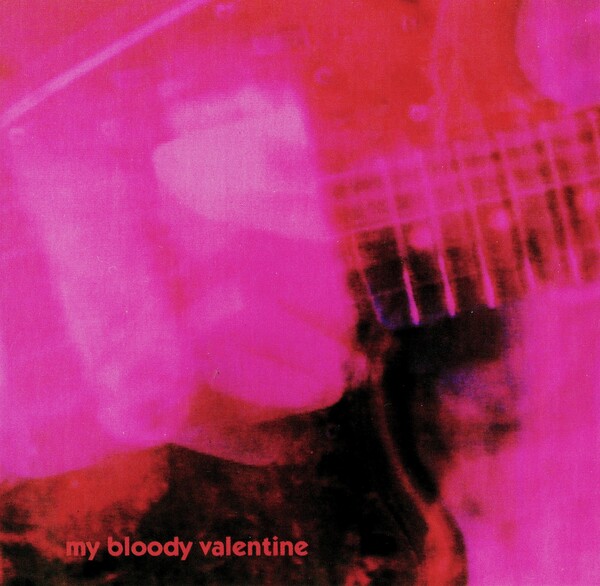
My Bloody Valentine is also an apropos name for an Irish band, because some of the relics of the actual Saint Valentinus–the 3rd century Catholic martyr originally buried in Rome–were eventually moved in the 19th century by Pope Gregory XVI to Whitefriar Street Carmelite Church in Kevin Shield’s hometown of Dublin, where it has became a popular place of pilgrimage. Though the Medieval feast of St. Valentine was originally established on February 14th to solemnly commemorate the death of the martyr, during the Middle Ages a popular folk-tradition arose that claimed birds always paired in mid-February, which in turn associated both mid-February and St. Valentine’s Day itself with romance and love. As we recently discussed, it has struck numerous folks over the centuries as somewhat humorous that an ancient holiday commemorating the horrific sufferings and death of a Christian martyr is now a day for lovers and romantics—or maybe it’s the perfect way to celebrate St. Valentine! The love of God, like all forms of love, can hurt tortuously and abominably too.
Which, perhaps not incidentally, also describes the live shows of My Bloody Valentine: an extremely loud wall-of-sound, with layers upon layers of guitar-effects in constant reverb, performed at around 130 decibels (well into the range of chainsaws, ambulance sirens, and fireworks). Per one source, “their reunion concerts in 2008 and 2009 were noteworthy for the controversy around the extreme loudness, with earplugs on offer at the doors and some audience members leaving because they felt ‘physically distressed’ by the noise.”[4]Goddard, Michael; Benjamin Halligan; Nicola Spellman (2013). Resonances: Noise and Contemporary Music. pg. 70. If you think these songs are supposed to be wimpy or mopey, it’s because you’re not listening to them loud enough. Elder Bednar once preached in Conference that meekness is not the same as weakness,[5]“Meek and Lowly of Heart”, April 2018 General Conference. and Shoegaze proves him right on that point. For all of the supposedly soft textures and the quieter mixes of their records, My Bloody Valentine was trying to hurt you as much as Valentine’s Day does–as much as love itself does–as much as St. Valentine himself was hurt.
Which mayhaps also points towards why diverse, immigrant, working-class Gen Zers from near New York have grown increasingly attracted to Shoegaze generally: when your life is filled with pain and anxiety and heartbreak and suffering—in an era such as ours filled with mass-deportations and hatred of refugees, of tax cuts for the rich and tax increases on the poor, of wars and rumors of wars, injustice, oppression, and child rapists and other assorted spiritual wickedness in high places, you want to do everything you can to both block it out and give your grief its fullest expression. C.S. Lewis in The Problem of Pain took seriously the question of why God allows so much suffering in this life, and so does Shoegaze in general and My Bloody Valentine in particular. When you are confronting directly the pains of this mortal probation, you don’t just want someone to resonate with your heartache and pain, no, you want them to make that heartache and pain feel as all-consuming as you feel it. You want something that also takes the problem of pain seriously.
I mentioned “slow-core” only parenthetically up above, but now I want to compare the two more closely: we have repeatedly argued on this site that early slow-core bands like Low in particular created a space for the Holy Spirit to become present within the silences themselves, the groanings beyond utterance, the peace which surpasseth understanding. Shoegaze, by contrast, does the exact opposite, blotting out all possibility of silence within the reverb and the wall-of-noise. Yet ironically, the Holy Spirit–the burnings of the Atonement–is still just as present in the noise as in the silences. (How else can it also make “your bones to quake” within you?) It is often a mistake, I think, to think of the Holy Spirit as some easily-offended old diddy, who scampers away at the slightest twig-break. If that were so, how would you be able to feel the Holy Spirit in the middle of a sprawling, crowded city, or in a bustling airport, or in the bombs of a war-zone–or like Elijah, who heard the still, small voice even in the midst of the fire, and the wind, and the earthquake?[6]1 Kings 19:11-13
Because I can testify that I have indeed felt the Spirit in each of these sorts of places, and I’m betting you have too. When the resurrected Savior visited the ancient Americas, His arrival was announced by “a voice as if it came out of heaven […] and it was not a harsh voice, neither was it a loud voice; nevertheless, and notwithstanding it being a small voice it did pierce them that did hear to the center, insomuch that there was no part of their frame that it did not cause to quake; yea, it did pierce them to the very soul, and did cause their hearts to burn.”[7]3 Nephi 11:3 The Spirit is, like Shoegaze, the softness that can make you quake and burn. This same Holy Spirit, the still, small voice, is as much in our most intense walls-of-noise as it is in our silences; as much in the searing passions of our heartbreak and loss as it is in our quietest and tenderest moments; as much in the love that hurts us as in the love that heals us, which as My Bloody Valentine reminds us is usually the same thing. Even the Atonement itself–the ultimate example of pure, divine love–caused God himself to quake in pain.[8]D&C 19:18 All Valentines, it turns out, are bloody.
References
| ↑1 | And yes yes yes, we’re fully aware that Cocteau Twins is perhaps more precisely classified as Dream Pop than Shoegaze, but let’s be honest: we’re officially in music-fandom-as-homework nerddom when we get into such insufferably hair splitting discussions. |
|---|---|
| ↑2 | Much like the terms Christian or Mormon, the derogatory term eventually became a neutral descriptor. |
| ↑3 | And yes, yes, the other two members of MBV, bassist Debbie Googe and guitarist/vocalist Bilinda Butcher, were both Englishwomen themselves, but the band still disrupted this weirdly persistent stereotype about Shoegaze. |
| ↑4 | Goddard, Michael; Benjamin Halligan; Nicola Spellman (2013). Resonances: Noise and Contemporary Music. pg. 70. |
| ↑5 | “Meek and Lowly of Heart”, April 2018 General Conference. |
| ↑6 | 1 Kings 19:11-13 |
| ↑7 | 3 Nephi 11:3 |
| ↑8 | D&C 19:18 |