
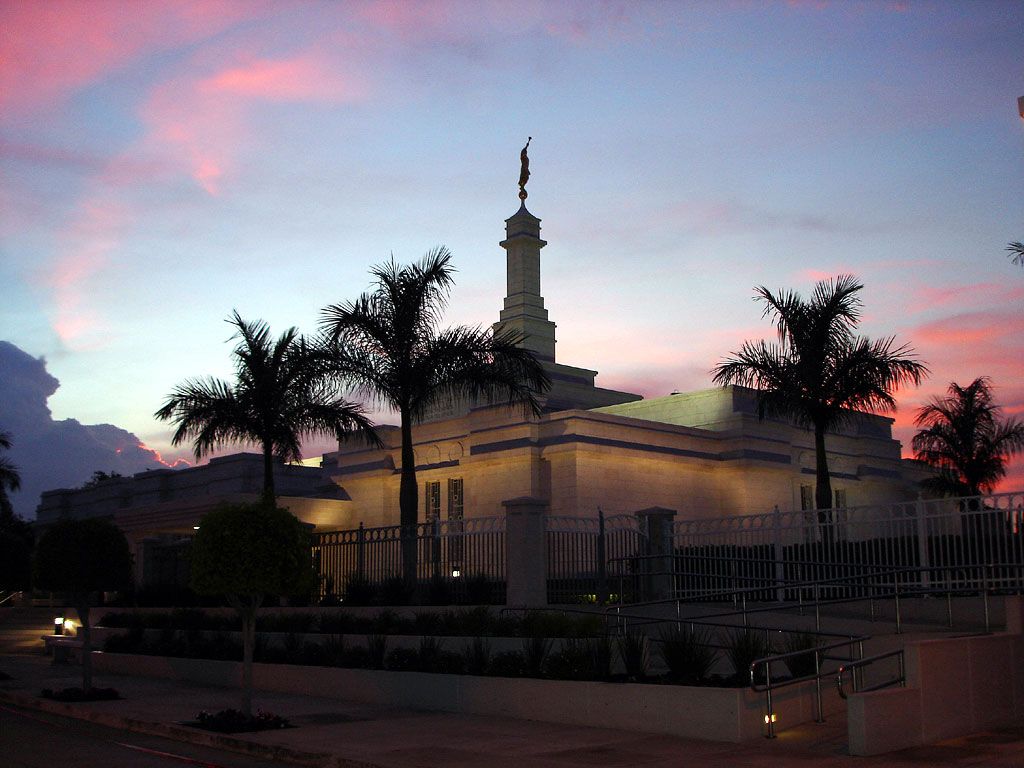
I’ve mentioned before how Fall of 2007, I completed my senior year at BYU-Idaho with an internship in Guadalajara, Mexico. I worked for a small English-language newspaper that served the Anglo expat community living in the state of Jalisco, where I even ended up publishing over a dozen or so news articles myself (which in retrospect probably violated a fair number of Labor laws against doing unpaid work, but I was too young to know my rights, and slave-wage Idaho certainly wasn’t going to enforce them). Although I did not end up pursuing a career in journalism afterwords, the internship nevertheless had a profound, long-range impact on me, for the following reasons:
- I got to know the Mexican people much more intimately–including many deported migrant workers–and witnessed first hand just how vicious, cruel, hypocritical, and counter-productive U.S. immigration policy really is: how we break up families and steal away parents from their children in the most morally bankrupt way possible; how we punish our hardest workers who alone do the back-breaking jobs of harvesting the food we literally need to survive; how we intentionally price the poor out from legal immigration so that we might all the more easily exploit and deport them; how we malign and slander people who come to the U.S. in the exact same manner and for the exact same reasons my ancestors did; how at every turn and at every level, we fail to follow the Lord’s injunction to “remember the stranger in your midst” (Leviticus 19:34) and His warning against those who heed not “I was a stranger and ye took me not in” (Matt. 25:43).
- In my position as a journalism intern—constantly combing through the Mexican daily’s and American news sites for ideas to write about—I also became much more fully immersed in the news of the world than I had been at any other point in my young life. I finally followed just how disastrously the invasion of Iraq really was going, how many lives it cost, how much money it wasted, how it was all based on obvious lies and fraud and oil-company conquests; I read up much more closely on the torture in detention centers that the CIA was conducting in flagrant violation of the 4th, 5th, 6th, 7th, and 8th amendments of the U.S. Constitution, the Geneva convention, and the laws of basic human decency; I saw the ramp up in rhetoric from the Bush administration to try and embroil us in Iran before his term ended as well; I saw the warning signs of the looming 2008 stock crash and Great Recession; I was there for the Tabasco hurricanes—which rivaled the devastation of Katrina in New Orleans just a couple years earlier—yet though Mexico had sent First Responders to help the U.S. in its moment of crisis, the U.S. never returned the favor; and so on and so forth.
All of this blood and horror upon the earth, which I’d been able to somewhat shield myself from while a student in middle-of-nowhere Rexburg but now had to confront daily and directly, weighed heavily upon my heart. And when I rode the bus to the Guadalajara Temple like the dutiful young BYU-I student I was, I would hear the words “reign with blood and horror upon this earth” from the mouth of Satan himself, and began to feel the oppressive weight of how true that statement really was.
What I was really feeling was complicit, you see: I had voted for George W. Bush in the first presidential election I was old enough to vote in–just after my mission-homecoming in September of 2004–not because I particularly cared about the man or ever fully supported the invasion of Iraq, but because I had been raised Republican by a pair of staunchly Republican parents in a deeply Republican ward in a deeply Republican corner of rural Washington state, and so felt very matter-of-factly that I should therefore vote for the Republican candidate, no matter what, because that was my team, my tribe, “God’s Own Party.” (I even distinctly remember having the impression that I should maybe vote for John Kerry instead while filling out my ballot, but shrugged it off at the time; I have never felt good about that.)
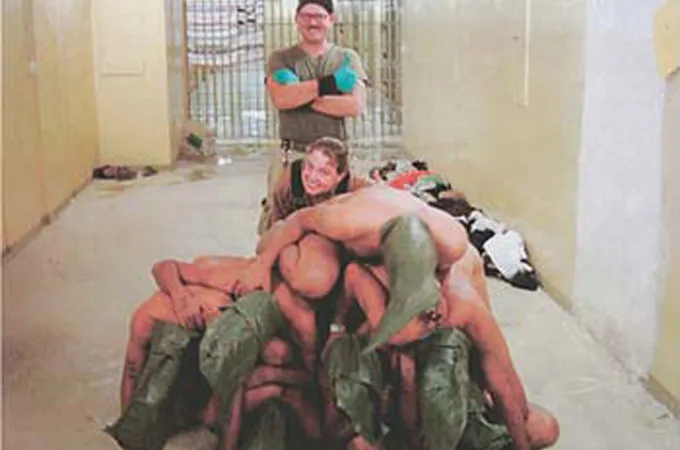
This, despite the fact that the stomach-churning torture images from Abu Ghraib already haunted me: Those pictures had come out during my mission you see, and had made front-page news on all the local newspaper stands we walked by (it was one of the few pieces of headline news I was fully aware of during my mission) so I definitely couldn’t plead ignorance on this one. The words of the Book of Mormon kept running through my head: “they did murder them in a most cruel manner, torturing their bodies even unto death […] and they do it for a token of bravery. O my beloved son, how can a people like this, that are without civilization—(And only a few years have passed away, and they were a civil and a delightsome people), But O my son, how can a people like this, whose delight is in so much abomination— How can we expect that God will stay his hand in judgment against us?“ (Moroni 9:10-14), and here I saw them literally fulfilled before my eyes.
Nor were those photos hidden away in the Puerto Rican or Mexican newspapers, like they were by the cowardly media in America. No no no, I kept realizing with growing horror, I had in fact voted for this; I was complicit; I was responsible; I had indeed upon me the blood and sins of this generation. We all did.
Likewise, I beheld how anti-immigrant animus had skyrocketed to alarming degrees among all the conservatives in my life–in rural Washington, in Rexburg, Idaho, even among some of the BYU grads I met in Guadalajara, who complained about Mexican immigrants in the U.S., all while attending medical school in Mexico without the slightest shred of self-awareness–and realized that in this I was complicit as well. Again, I had voted for these policies all my young life. My personally warm feelings towards Mexican and Latinos generally were frankly irrelevant, because my tacit support for these anti-immigrant policies had already wrecked real havoc and sown real suffering among real human beings. That mine was only one small vote among tens of millions did little to alleviate my growing guilt; “It’s ok to sin when everyone else is too” was not something I’d ever been taught in Sunday school growing up, and didn’t believe now; no, I was still complicit in the blood and sins of this generation.
Which is why the words near the start of endowment ceremony–“that ye might be cleansed from the blood and sins of this generation”–struck me with more gravity than they ever had before while I was doing sessions at the Guadalajara Temple. Suddenly I had a stronger inkling of what the Temple covenants were there for, which is something I had struggled with before, you see. My own live endowments just before I entered the MTC in 2002 had left me so utterly baffled I considered not only not going on a mission, but leaving the Church entirely; it was all too entirely weird. The quiet peace of the Holy Spirit which surpasseth understanding is all that kept me from running out of there screaming in anger and frustration; and at least while I was in Puerto Rico (which was decades away from getting a temple of its own), I was able to just compartmentalize it for the time being.
And then when I had an absolutely scorching prayer after my mission wherein I pleaded for my dying mother’s life–and felt that same quiet peace of the Holy Spirit which surpasseth understanding reassure me with love and tender care that she would pass away that very night–I determined that if I still very much didn’t understand the Temple, then I would at least follow the peace that I felt there.
And I’m not going to tell you that I understand it any better now; here I have a PhD in English and have read the complete works of Nibley, but I still often feel like a teenager in the Temple. Sometimes, the best I can do is say that its fundamental weirdness is the point, because it is preparing us for a world fundamentally alien from our current one, and as such can, will, and should feel completely alien at every point. What I finally felt an inkling about at the Guadalajara Temple in 2007, then, is that the particular manner in which the next life will be completely alien from this one, is that there will be no more complicities with the blood and sins of our respective generations. Wars, rumors of wars, torture, prejudice, bigotry, torture, and a host of other evils, will not only be verboten but celestial impossibilities. Hence, the great need for us to repent, and prepare to live a completely alien law–especially, the Law of Consecration, the United Order, wherein there are neither rich nor poor among us. It’s what it means to actually leave behind the things of this world and seek for the things of a better. Especially in our latest era of government sanctioned torture and murder and anti-immigrant hatred (And only a few years have passed away, and we were a civil and a delightsome people), it is more incumbent upon us than ever to cleanse palaces from the blood and sins of this generation, lest we become as the Nephites of old. Because if you’re not willing to repent and embrace the other world, then the blood and sins of this world really will remain upon you.