
“For of all sad words of tongue or pen,
The saddest are these: ‘It might have been!‘”
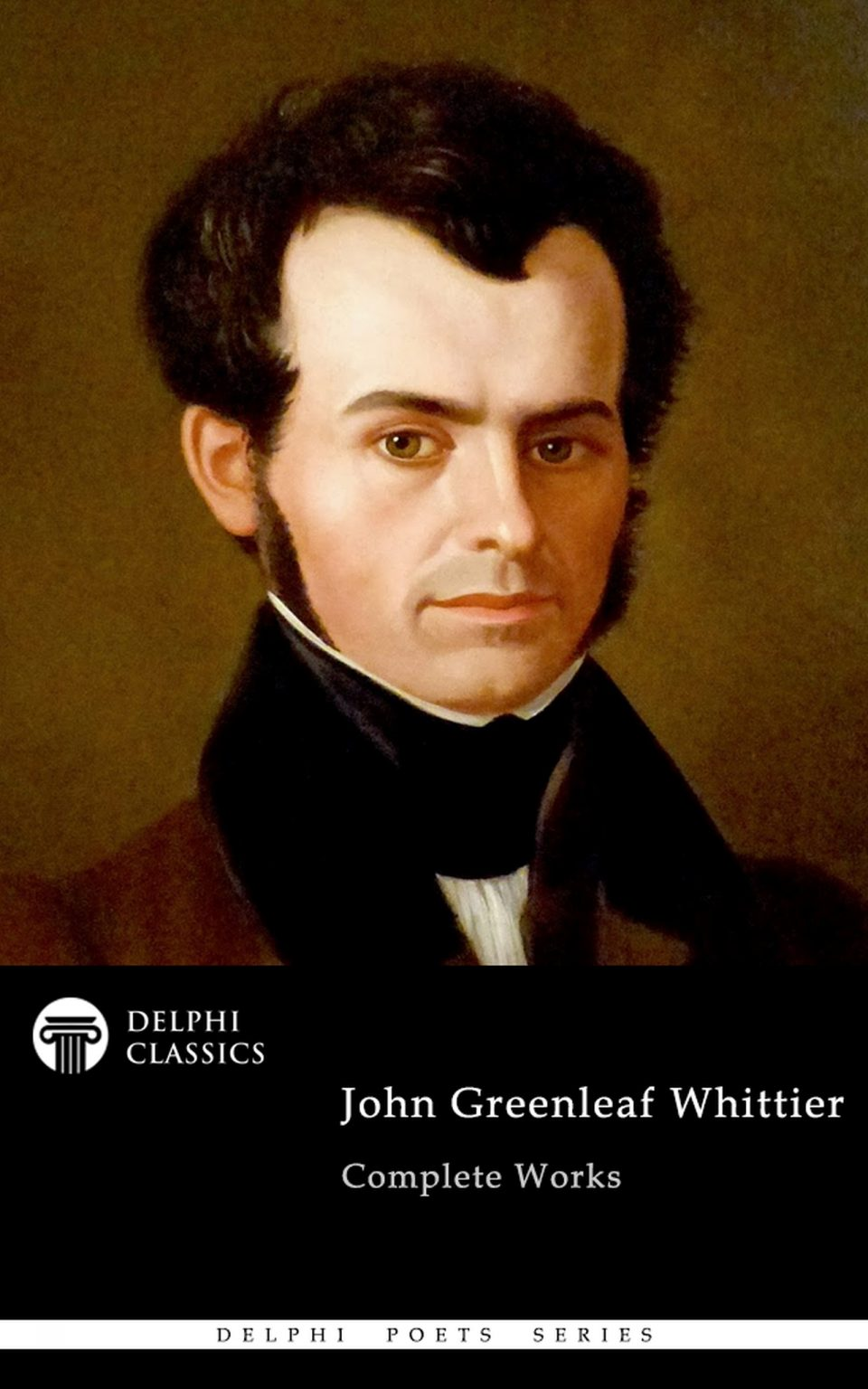
This famed couplet by the 19th-century Quaker poet John Whittier Greanleaf–from his peon to lost love “Maud Muller“–was a favorite of the late President Thomas S. Monson, who cited it in a General Conference talk at least a half-dozen times between 1972 and 2009[1]sadly we don’t yet have online access to any of his GC talks before 1970, typically as a manner by which to encourage his listeners to practice greater Christ-like love, kindness, and forgiveness, so that they would not later be filled with regret.
This intersection between Greenleaf and Monson fascinates me, because: 1) Greenleaf in his day was best known as an abolitionist poet; and 2) per Matthew L. Harris’s excellent 2024 study Second-Class Saints: Black Mormons and the Struggle for Racial Equality, Monson, along with Gordon B. Hinkley and Boyd K. Packer (of all people), was one of the trio of Apostles who first agreed to meet with the sparse few Black LDS members living in Salt Lake City in the early-1970s, heard their valid grievances, and so agreed to help them form the Genesis ward for Black members–which turned out to be an early test-balloon for Spencer W. Kimball overturning the racist Black priesthood ban in 1978.
Having come of age during the Hinkley/Monson years myself, it was frankly a relief for me to learn that tidbit about them. I had eagerly read Edward L. Kimball’s otherwise-excellent 2005 biography of his father, Lengthen Your Stride, because I was keen to learn the behind-the-scenes politicking for Declaration 2. However, as a Deseret Book imprint, Lengthen Your Stride was maddeningly vague on who exactly was the opposition to Spencer W. Kimball during those fraught years in the late-70s. I of course understood why those details were left out by a Church-published book[2]yes, yes, I was later told that information could be found in the book’s accompanying CD-ROM, but I had checked out my copy from a library, and the CD was missing; what if Hinkley or Monson themselves were among the hardliners against lifting the ban? Such a revelation might not only embarrass current Church leadership, but impede current Church progress in sub-Saharan Africa.
But Oxford University Press had no such compunctions; so when they release Second-Hand Saints in ’24, it spilled all the tea–and I had all the more reason to be furious with folks like J. Reuben Clark, Joseph Fielding Smith, Harold B. Lee, Ezra Taft Benson, and Mark E. Petersen. Conversely, my admiration only grew for folks like Hugh B. Brown, Spencer W. Kimball, and even for Bruce R. McConkie–the ultra-rare hardliner who actually changed his mind on a major issue when confronted with new evidence![3]May we all demonstrate similar humility. And again, to my great relief, I found I could even add the Church Presidents of my youth to that list, as I learned that Hinckley and Monson were among Kimball’s earliest allies in outmaneuvering the hard-liners.
Indeed, the revelation that Packer was among Kimball’s early allies was frankly a surprise to me, since he always seemed to come off a hard-liner in literally everything else[4]which just goes to show why Christ commanded to judge not, lest ye be judged. But Hinckley and Monson I should’ve guessed on; their Conference addresses were incessantly centered on the importance of kindness–and as Dorothy Thompson published in Harpers in August of 1941, “nice people don’t go Nazi,” let alone segregationist. Niceness towards others is not just a fringe benefit of the Gospel of Jesus Christ, but its beating heart and soul–the charity which never faileth, without which ye are nothing, and the only manner by which we can qualify to become as the Gods ourselves–and Hinckley and Monson by all appearances had it in spades.
But I also should’ve assumed better of Monson in particular, even before I read Harris’s book, because Monson was always the one repeatedly quoting the Abolitionist poet John Whittier Greenleaf in General Conference; clearly he was already susceptible to an anti-racist argument, and on the same wavelength as one of America’s earliest and greatest anti-racist poets. The books that stay with you really are the ones that reveal you; may our reading choices do the same.
References
| ↑1 | sadly we don’t yet have online access to any of his GC talks before 1970 |
|---|---|
| ↑2 | yes, yes, I was later told that information could be found in the book’s accompanying CD-ROM, but I had checked out my copy from a library, and the CD was missing |
| ↑3 | May we all demonstrate similar humility. |
| ↑4 | which just goes to show why Christ commanded to judge not, lest ye be judged |