
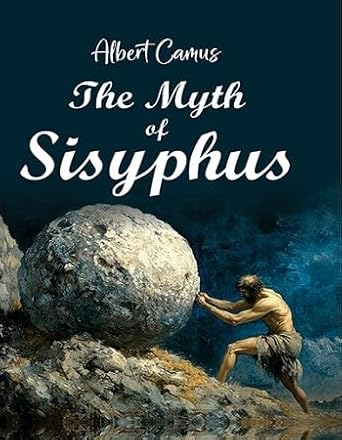
The Nobel-Prize winning French novelist Albert Camus wrote his famed book-length essay Myth of Sisyphus in 1942 Paris, smack dab in the middle of the Nazi occupation of France. It was a dark time when the bad guys had definitively won, when viciousness and performative cruelty had overthrown kindness and basic human decency, when propaganda and flagrant lies had displaced even a bare concern for facts and truth, when the Gestapo marched freely down the streets with none to restrain them, when minorities were being flagrantly hunted down and shipped off to prison camps, when torture and ethnic-cleansing were normalized, when all pretense of human rights and rule-of-law were mocked and trampled upon, when a tiny and ineffectual Resistance was being continually undermined by their own countrymen either too complacent to protest or who openly collaborated with the regime, an era when “we call the proud happy; yea, they that work wickedness are set up; yea, they that tempt God are even delivered,”[1]Malachi 3:15 when by all appearances no one was on their way to save them, when even God Himself seemed either absent or non-existent, which amounted to the same.[2]All comparisons to our current day are strictly intentional.
It was in an atmosphere like this, one where the vicious reigned with blood and horror upon this earth, where the very words “righteousness” and “justice” and “honesty” and “decency” all seemed absurd burlesques of reality, where all of life and existence and the universe itself felt utterly and coldly indifferent to humanity’s bottomless capacity for suffering and sadism, that Camus confronted the question of why he didn’t just kill himself now and get it over with. Hence why he opened Myth of Sisyphus with that memorable first paragraph:
“There is but one truly serious philosophical problem, and that is suicide. Judging whether life is or is not worth living amounts to answering the fundamental question of philosophy. All the rest—whether or not the world has three dimensions, whether the mind has nine or twelve categories—comes afterwards. These are games; one must first answer. And if it is true, as Nietzsche claims, that a philosopher, to deserve our respect, must preach by example, you can appreciate the importance of that reply, for it will precede the definitive act. These are facts the heart can feel; yet they call for careful study before they become clear to the intellect.”
The entire rest of the book, then, is Camus carefully hunting for a reason to continue living in the manifest absurdity of existence, with the stark promise that if he can’t find one, then he will have to follow through with his promise to kill himself; and it does indeed take him the entire book to do so. He never mentions the Nazis or the war anywhere in the book—partly to not attract the diabolical attentions of the book-banning fascists, but also partly because these terrible questions would have remained the same even if the Nazis had never come to power. Ultimately, he concludes that grappling against the absurdity of existence itself is sufficient to grant life meaning. As promised by the title, he accomplishes this resolution by latching onto the Ancient Greek myth of Sisyphus–that Corinthian King condemned to roll a boulder eternally up a mountain only to watch it roll back down again, as punishment for daring to cheat Death itself–as a useful metaphor for one’s ceaseless striving against life’s intrinsic absurdity. Hence in his equally memorable concluding paragraph, he writes:
“I leave Sisyphus at the foot of the mountain! One always finds one’s burden again. But Sisyphus teaches the higher fidelity that negates the gods and raises rocks. He too concludes that all is well. This universe henceforth without a master seems to him neither sterile nor futile. Each atom of that stone, each mineral flake of that night filled mountain, in itself forms a world. The struggle itself toward the heights is enough to fill a man’s heart. One must imagine Sisyphus happy.”[3]Seriously, you could just read the first and last paragraph and skip everything in between, and you’d have the gist of the book.
That last line, “One must imagine Sisyphus happy,” has since entered our global lexicon, endlessly quoted, cited, even parodied[4]e.g. when a hapless grad student writes, “One must imagine Sisyphus tenured”. It is without doubt the best solution that Camus could have come up for within his cold, indifferent cosmology.
It would in fact be tempting to use Myth of Sisyphus as an example of the superiority of a religious sensibility towards promoting action; e.g. MLK’s “I have a dream” and “I have seen the promised land” have definitely motivated more people to fight for their rights than the dull certainty that we will have to do this all over again ad infinitum. For that matter, our own Ether 12:4 declares that, “Wherefore, whoso believeth in God might with surety hope for a better world, yea, even a place at the right hand of God, which hope cometh of faith, maketh an anchor to the souls of men, which would make them sure and steadfast, always abounding in good works, being led to glorify God.” Generally speaking, it’s the certainty that God Himself will finally, by His Grace, help us finally get that boulder over the top once and for all that gives us the hope and fortitude to keep pushing it up the mountain; for it is not the boulder itself that interests us, but the stone uncut from the mountains that we have faith will one day fill the world. Certainly religious leaders like Martin Luther King, Jr., Malcolm X, and Mahatma Ghandi, for example, all accomplished far more positive change within their lifetimes—even in the face of certain murder—than the most coldly rationale existentialist philosopher like Camus could achieve, one might argue.
But that’s not quite fair to Camus, is it. There is for starters the valid objection that plenty of other self-proclaimed religious folk have never resisted at all, but collaborated quite happily with the fascists–Generalissimo Franco was a staunch Catholic, and Hitler declared Christianity to be the basis of Germany’s “national morality”–both then as today; and conversely, plenty of other true believers found their resistances to be just as impotent and futile as Camus’. As no less than Victor Frankl noted in Man’s Search for Meaning, for many Holocaust victims, the only way their faith empowered them was to have the Shema Yisrael and Lord’s Prayer defiantly on their lips as they were forced into the gas chambers.
And even if we restrict ourselves only to Mormonism in this discussion, well, here we would do well to recall that The Book of Mormon is the record of a Prophet-Historian who spent his whole life long preaching passionately to his people to pray for charity and seek out after every good thing, only to witness them descend into genocidal self-destruction despite all his best efforts. Whereas Albert Camus worried he would have to commit suicide if he couldn’t find a valid reason to keep living, Mormon watched his people commit suicide quite “willfully,” fighting with a mad war lust that backfired on them astronomically, all without the slightest shred of self-reflection or self-awareness. Such, in fact, might arguably be the overall thesis of The Book of Mormon: that if we don’t learn how to fight the absurdity and viciousness and cruelty of the world within ourselves, that we will in effect commit suicide as well. In this regard, Camus and Mormon are simpatico.
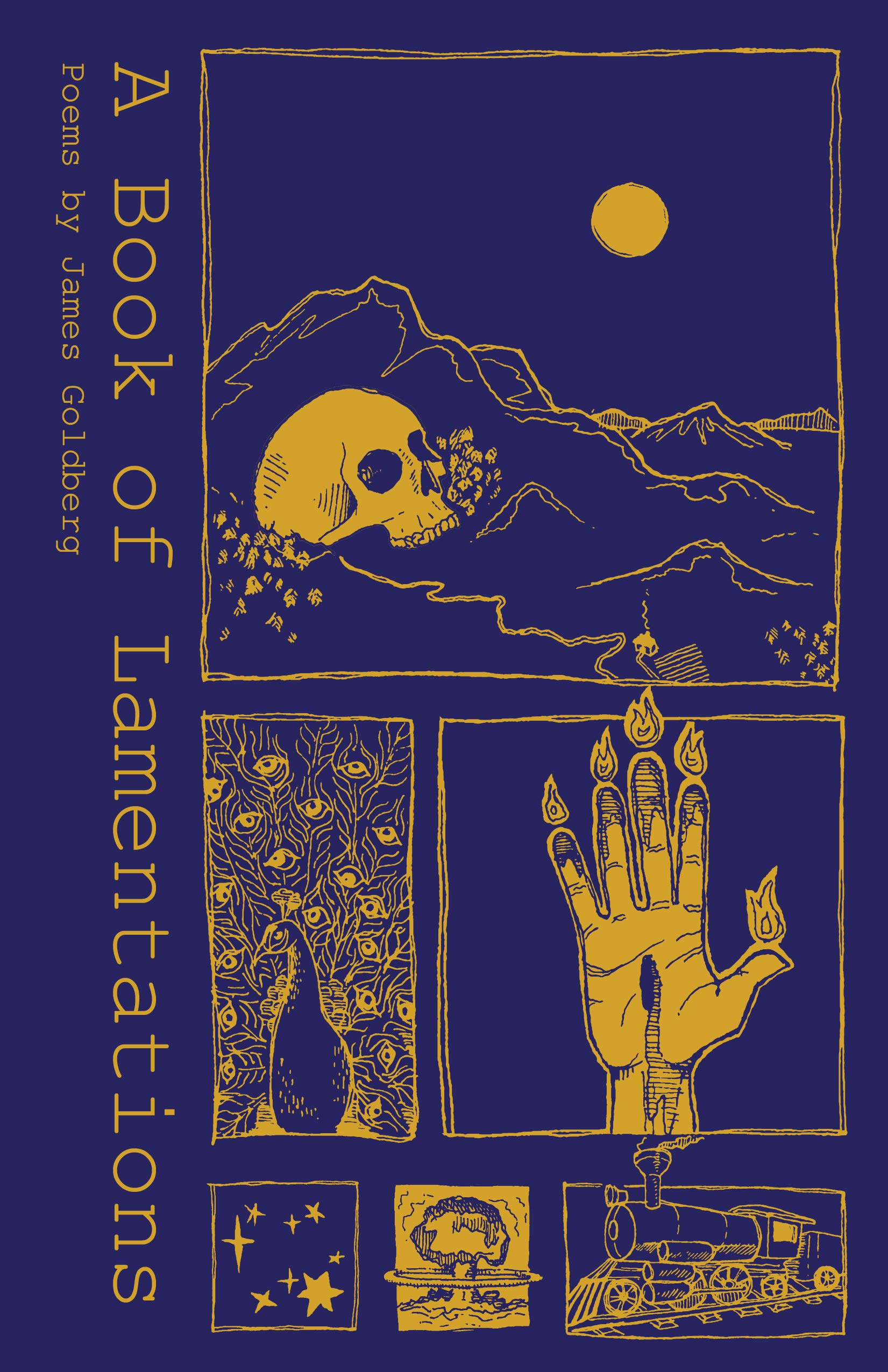
Indeed James Goldberg makes this exact same point far more eloquently than I in his excellent 2020 poetry-collection A Book of Lamentations, whose opening poem is fittingly entitled “The Book of Mormon Was Written For Our Day”:
“A voice from the dust
for a nuclear age
for a world leaning in
to its climate’s change
for men gone mad with
homicidal rage which
cannot be quenched
with children’s blood
For us, a lonely
prophet carved
Coriantumr’s fate
into plates
of tarnished
gold
This is the truth
he buried beneath
us: that we are
so very capable
of choosing death
and choosing it
and choosing it
and choosing it
until we grow numb
until even beaten,
broken, breathless,
our bodies will
strain toward
the consuming
violence of a
total
self-destruction.”
And when the Nephites did in fact destroy themselves as totally as the Jaredites before them—and implicitly, as we we will as well, if we do not repent—Mormon’s son Moroni, I can’t help but suspect, flirted with the idea of suicide as well. The bad guys had unequivocally won, after all, and what an empty victory it was (the Lamanites promptly began warring among each other once their common enemy was destroyed). The sky above seemed coldly indifferent to his sufferings, no one was coming to save him, and God seemed to somehow be either absent or non-existence, which amounted to the same thing.
Yet when the Book of Moroni opens, he writes, “I had supposed not to have written more, but I have not as yet perished”–and maybe I’m reading between the lines here a bit, but it certainly feels like he was contemplating just letting himself perish as well. But rather than kill himself and be done with it, he decides, like Camus, to write a book instead, as a form of fighting against the apparent endless absurdity and cruelty of this life. Digging deep within his soul, he writes a brief exegesis about how the Church was established, records the Sacramental prayers, copies a few impressive sermons and letters from his father on the topic of charity, and finishes with a promise to pray about whether these things are true.
Those of us who served missions memorized and recited Moroni’s promise so frequently that we perhaps missed what the actual promise was: it wasn’t whether the Book itself is true (I suspect Moroni couldn’t have cared less whether you found it true or not), but only whether “these things” are true. And which things in particular? The mercy of God, faith, hope, and charity–things that often feel hopelessly absent from and inadequate to salvage this wicked world of ours, absurd burlesques of reality, but that are all the more real even in their purported absence. It is not existence that is absurd, but ourselves, when we deny the very real possibilities of charity; the way to wrestle against the absurdity in the face of abject cruelty, then, is to be even more full of love than ever. In fairness, he acknowledges that this is impossible to do on our efforts. We must pray for it, which never faileth, for all things must fail–
References
| ↑1 | Malachi 3:15 |
|---|---|
| ↑2 | All comparisons to our current day are strictly intentional. |
| ↑3 | Seriously, you could just read the first and last paragraph and skip everything in between, and you’d have the gist of the book. |
| ↑4 | e.g. when a hapless grad student writes, “One must imagine Sisyphus tenured” |