
In an old retrospective I once wrote about the 1999 cult comedy Office Space, I noted how director “Mike Judge, when asked how it was that […] Office Space flopped in theaters only to become mega-popular in video rental and cable, chalked it up to poor marketing. The studios simply didn’t know how to sell it, because they didn’t understand it in the first place. As he tells the story, the studio execs—largely all old-money nepo-babies themselves—were utterly baffled by a plot wherein the hero hates his job but doesn’t quit. Why didn’t he just leave, they asked? So removed were they from the lived experiences of the working and even middle classes, that it was beyond their meager imaginations to understand how most human beings work crappy jobs because they have to, not because they want to. Jennifer Aston’s simple line late in the film, ‘Peter, most people don’t like their jobs,’ was beyond their comprehension. (So much of modern Hollywood makes sense once you understand that).”
Indeed, modern Hollywood has only become even more divorced from the concerns of real working class Americans in the quarter century since. There is just the entire genre of Rom-Com movie-jobs–Canoe builder, Dating Coach, Professional Gingerbread House decorator, etc.–that at a certain point stop sounding cute and start coming off as actively insulting to the super-majority of people who actually have to work for a living. Just within the last decade, there was Modern Family, a TV show which featured an upper-middle-class family in a spacious house at the height of Great Recession–as though such were typical, and not a massive outlier–or how each holiday season, we increasingly question how on earth Kevin McCallister’s Dad afforded a giant home in the Chicago suburbs while also flying his entire extended family first-class to Paris. We could multiply examples. So could you.
Which is wild, because I strongly suspect that this disconnect is relatively recent, that Hollywood didn’t always use to be this bad at this. In fact, only a decade before Office Space dropped, some of the biggest sitcoms on television included actual thoughtful portrayals of blue-collar, working-class angst in Roseanne, Married…With Children, and of course the first season of The Simpsons.
For it is worth recalling today that, years before flying on a Space Shuttle and piloting the Monorail and visiting Australia and befriending President Ford and meeting the Beatles in a Barbershop Quartet and 35+ years of being an absolutely massive global phenomenon, the very first episode of The Simpsons was a Christmas special that aired on December 17th, 1989 entitled “Simpsons Roasting on an Open Fire,” the plot to which centered on how Homer was too broke to afford Christmas gifts for his family.
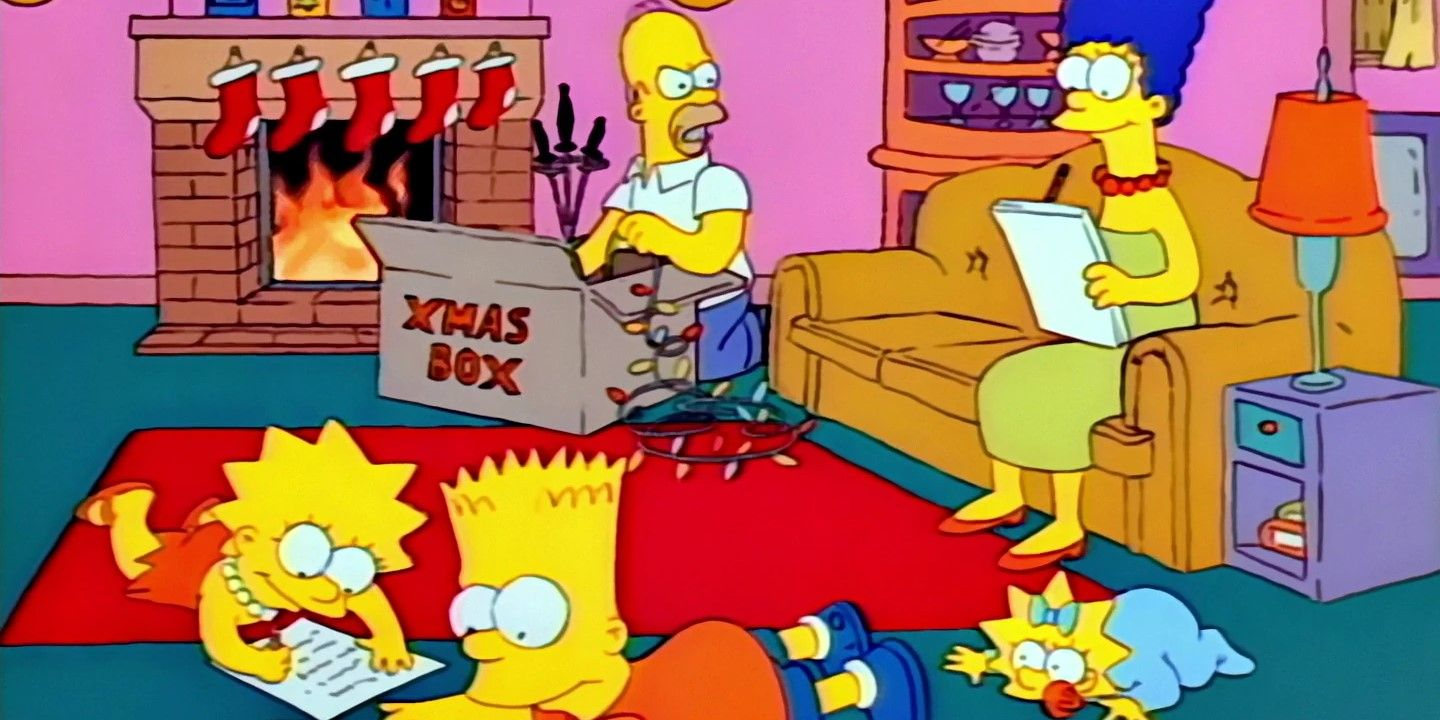
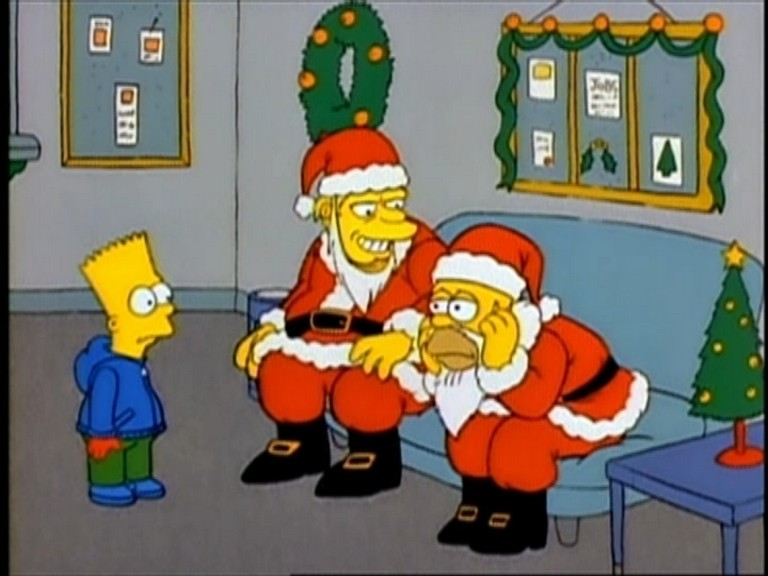
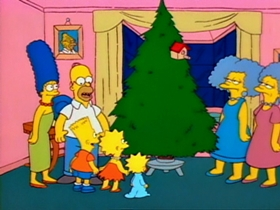
In one indignity after another, Homer learns he will not be getting a Christmas bonus at the nuclear power plant (“I’m proud to announce that we’ve been able to increase safety here at the plant without increasing the cost to the consumer or affecting management payraises. However, for you semiskilled workers, there will be no Christmas bonuses”); he tries shopping at the dollar store for gifts (“Now that just leaves little Maggie. Ah, a squeak toy. It says it’s for dogs, but she can’t read.”), only to bump into his much more successful neighbor Ned Flanders (who early on was obnoxious not because he was a Christian goodie-goodie, but because he was wealthy); he takes on a second job as a Mall Santa, which moves Bart to declare, “Dad, you must really love us to sink so low”; he chops down a tree in a national forest in the dead of night cause he can’t afford a Christmas tree otherwise (“Why is there a birdhouse in it?” “Uh, that’s an ornament.” “Do I smell gunpowder?”); and in his greatest ignominy, he takes Bart to the racing track cause his drinking-buddy Barney Gumble tells him that betting his mall-Santa paycheck on a dog named Whirlwind is easy “Money in the bank.”
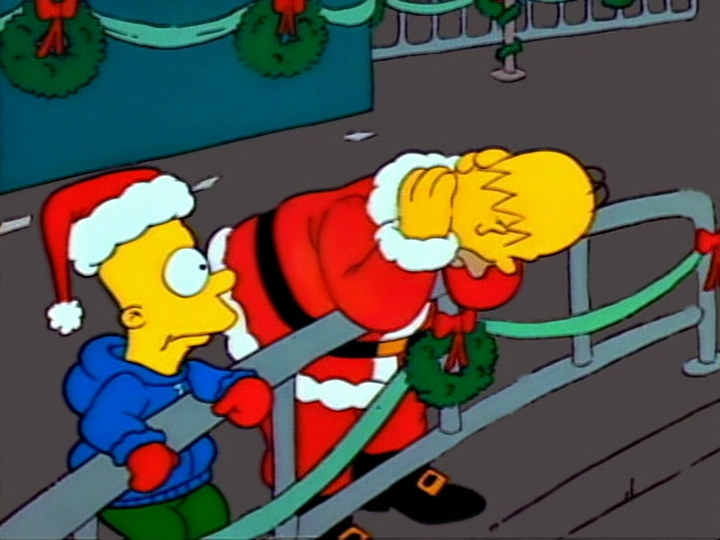
Yet despite his guilt at taking his son to a “sleazy race track,” it is Bart who convinces Homer to bet it all on a dog with 100-to-one odds named “Santa’s Little Helper,” because “if TV has taught me anything, it’s that miracles always happen to poor kids at Christmas. It happened to Tiny Tim, it happened to Charlie Brown, it happened to the Smurfs, and it’s gonna happen to us.” Of course, Bart lampshading the trope jinxes it, and in short order Santa’s Little Helper comes in dead last, prompting Bart to dryly observe, “I can’t believe it, but it looks as though television has betrayed me.” Homer in turn hangs his head in despair, his last chance to save Christmas ruined.
The show would swiftly get away from its working-class roots within a season or two: Homer would become more cartoonish, the plots more surreal, the jokes quicker, the satire broader. Time also has had a strange way of blunting the impact of those earliest episodes; the “modest” two-story home that was a sign of Homer Simpson’s tight financial straits in 1989 is practically a status symbol in the 2020s, something that likely would post for a solid half-million on Zillow nowadays and still go over asking. But then, The Simpsons after that first season had abandoned all pretense of realism even back in its ’90s Golden Era. We are now decades removed from Homer in the Dollar Store.
Yet even after 35+ seasons of wildly varying quality that have somehow spanned the globe and the reaches of time and space, all of The Simpsons mind-boggling international success still has not fully erased the cold seriousness of that Reagan-era series premier. That episode still has a definite undercurrent of melancholy and sadness at its heart.
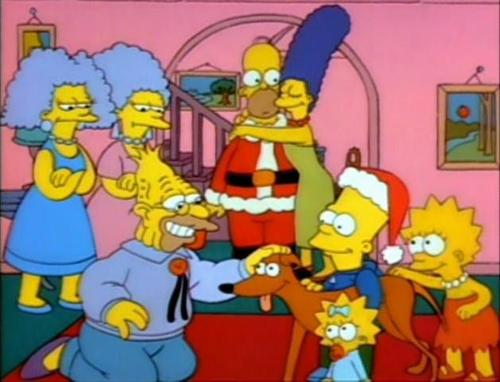
But it is still a warm heart, all the same. The episode concludes with Homer, heavy of heart, steeling himself to confess to his family that he didn’t get his Christmas bonus, that “I tried not to let it ruin Christmas for everybody, but no matter what I did–” only to be interrupted by Bart showing off how they adopted Santa’s Little Helper after he got thrown out in the streets by his owner. (When Bart had asked if they can keep him, Homer protests, “But he’s a loser. He’s pathetic. He’s…[dog licks his face] a Simpson”). In short order, the family ignores Homer’s confession in order to crowd around and coo over their adorable new dog. “Oh, this is the best gift of all, Homer!” declares Marge in all sincerity, as does the episode itself.
There is scarcely a believing bone in The Simpson‘s body, which even at its ’90s zenith was always much more likely to mock religion than take it seriously. However, it is worth noting that the Christ child whom the Christmas season commemorates was born in a feeding trough because there was no room for them in the inn; He was “despised and rejected by men, a man of sorrows and acquainted with grief. And we hid, as it were, our faces from Him; He was despised, and we did not esteem Him”; he broke bread with the lepers, the prostitutes, the tax-collectors, and all the other despised “losers” of the earth, because the first shall be last and the last shall be first.
That is, there is also a strong undercurrent of melancholy permeating the heart of the Christ story–but what a warm heart, too! In fact, it has the warmest heart of all. And if you start to think that you yourself are a better provider and role-model than Homer Simpson, and therefore more righteous, as Christ Himself declared, “Verily I say unto you, That the publicans and the harlots go into the kingdom of God before you.” So too will the Simpsons. It was precisely these despised and poor ones that the Savior most sought to uplift. May we go forth and do likewise.