
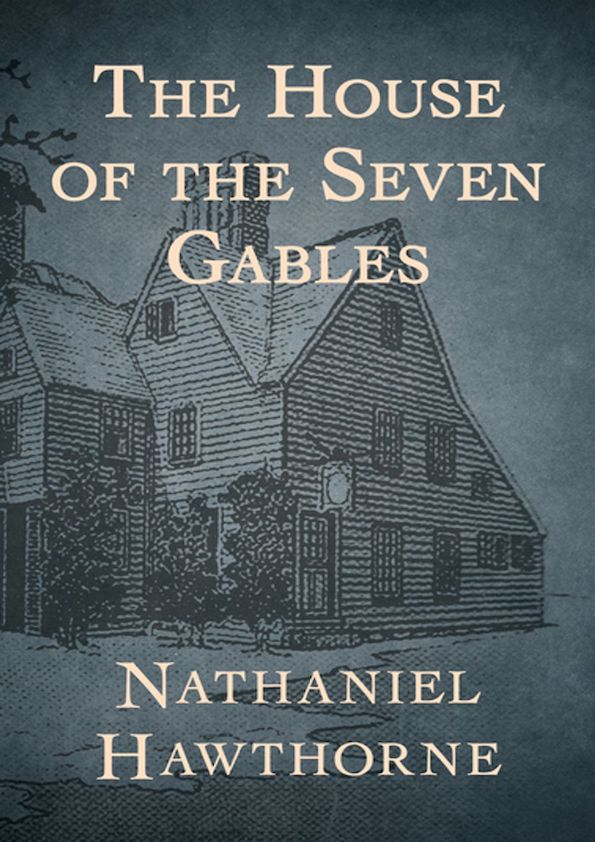
A year ago I finally visited Salem, MA, primarily to see the real-life House of the Seven Gables, because I had enjoyed the novel at least as much as I had The Scarlet Letter in college. (The LDS affinities for Hawthorn run deep, by the way; Eugene England, when he wasn’t publishing on Mormonism, was a Hawthorne scholar; he inserted an article he had once written on Hawthorne’s first story as the finale to Why the Church Is As True as the Gospel.) It did not disappoint, and the Seven Gables House alone was worth the trip.
But most folks don’t go to Salem for the Hawthorne tourism, but the witches. Site of the infamous 1692 Salem witch trials, the town today has long cashed in on witch-themed tourism. The local high school mascot is the witches, there is a witch bank, witch savings and loans, witch diners, witch restaurants, witch museums, witch villages, witch gift shops, a statue to the ’50s TV show Bewitched, etc., etc.; if you are into Halloween in general and witches in particular, Salem is the city for you.
Save that all these various museums don’t open till 10am. I was traveling with small children at the time who regularly woke me up too early, so that left us a bunch of morning to fill when we arrived in Salem. We decided a decent way to pass the time till things started opening up was to visit the actual memorial to the victims of the Salem witch trials, since that’s open all day and requires no tickets.
And it was a definite buzz-kill. The memorial is found next to an old graveyard, and features a semi-circle of hewn-stone benches with the name of each victim engraved on each, their death date, and their mode of execution (usually hanging, but also John Proctor listed as pressed under a rock). Quotes from these various victims professing before Almighty God their innocence are also engraved into the bricks in the ground in front of the benches. People leave flowers and seashells on the benches as offerings to the dead. It was all a very somber reminder that no actual witches died in Salem–that there were never any witches in Salem–only innocent human beings, who were falsely accused and killed by murderous, conniving hypocrites to steal their land and enrich themselves.
Suddenly Salem felt less like a fun, campy tourist trap, than a sort of amusement park constructed next to a mass-grave, all built in the poorest taste. In a moment, my appetite for museums and gift-shops vanished.
And yet, and yet. If you do stay in Salem till after 10am, you will soon see the streets thronging with tourists in witch-hats–yes, even in late-Summer, before the Autumn has kicked in, before a single leaf has started to turn–and overwhelmingly those tourists will be women.
And just as suddenly, I found myself reading the town more charitably. Is not all this camp and fun a clear sign that the “witches” won? No one comes to Salem nowadays to gloat over the deaths of the witches; haven’t done so in centuries, if they ever did to begin with; the memory of those wicked men is nigh-universally reviled and despised, their names forgotten, their crimes condemned. Not only is the innocence of those murdered women now widely affirmed, deep down everyone even kinda wishes they had been real witches! Not to kill them, mind you, but to join them. All this witch campiness, then, is not a trivialization of these peoples’ murders, but rather an act of defiance, of resistance.
Such has likely always been the case with witches. Almost every young women you know, after all, has gone through some sort of witch phase in their teens, and the reasons aren’t hard to understand: witches are the one cultural archetype we have wherein women are permitted access to power without needing to be connected to a man. (Certainly between the Seattle Mariners and the UVU shooting, witches have been having a cultural moment lately.)
This is no small thing. We live in a country where a literal confirmed rapist can be elected over a woman, and that quite recently. Flagrant misogyny is growing in all-male spaces online, eating-disorders and pink taxes still run rampant–in fact, are only getting worse–and all of the hard-earned gains women have made over the past century have become as precarious as ever. And of course within our own Church–where we are literally willing to end a General Conference session an hour early rather than allow even token women speakers extra time to speak–it remains literally impossible for a woman to have access to power and authority without being connected to a man. There is not a single decision that a Relief Society President can make that can’t be vetoed by a man above her; the Bishop’s wife might actually have more influence than a literal Women’s President. It is always women who must be sealed to one man, never the other way around. All of women’s power and influence is contingent upon some other man.
At least institutionally. For we also have a doctrine of Heavenly Mother–though we are relentlessly told never to pray to her, to pass her over in “respectful silence,” to not even acknowledge She is there. And yet She is there, a divine feminine independent and present, despite all our attempted to silence her. And there are days indeed when I wonder if our Heavenly Mother is in fact a witch, in all the best senses of the word–the divine strength of all innocent women–and if one day, like the “witches” of Salem, we will wonder why it ever seemed so just or plausible to try and silence Her.