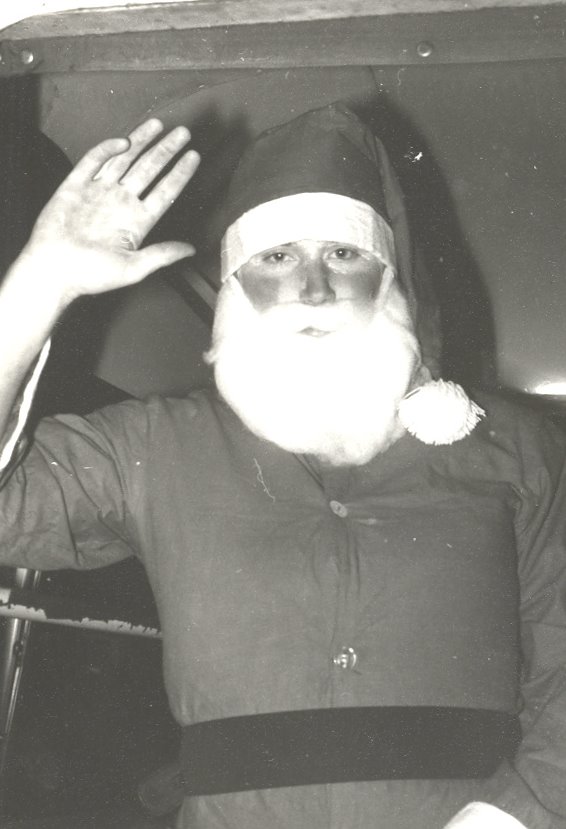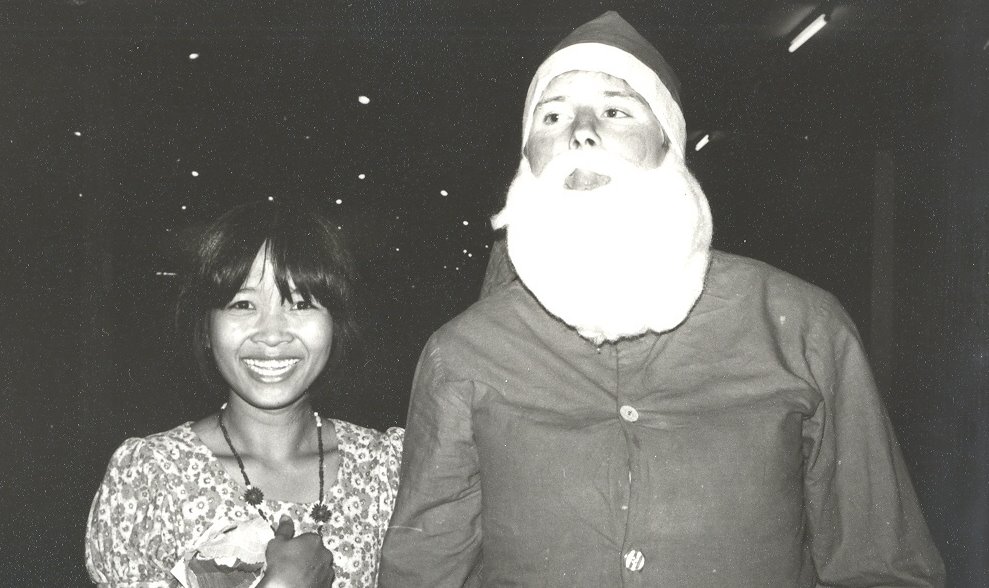
Was it foolish or inspired—this idea of smuggling the spirit of Christmas into the swamps of Thailand? Could a red suit and a cotton beard convey a message that rote memorized discussions had sometimes fallen short of?
It all started with a flash of red.
December 23, 1973. Elder Montgomery and I stood frozen in the doorway of a cluttered Bangkok souvenir shop, staring at what could only be described as a miracle in polyester: a full Santa Claus costume, white-trimmed and sagging on a rusted hanger like a red flag daring us to make a move.
“Thinkin’ what I’m thinkin’?” he whispered, eyes wide.
“Yep,” I said, already reaching for my wallet. “We bring Christmas to the swamps.”
By sundown, we had the costume, a sack of gift-wrapped trinkets, and a handful of goodies—just enough change left for bus fare. Our plan was simple: disappear into the maze of swamp shanties outside Thon Buri and quietly deliver joy where joy rarely visits.
At the bus stop, we drew stares like magnets in red velvet. Murmurs rippled through the waiting locals—half amusement, half confusion.
“Farang khii nok chati xwn,” a little boy grimaced, pointing. Stupid fat foreigner.
Montgomery chuckled, snapping photos with his camera. “We’re gonna scare the Christmas spirit into ’em.”
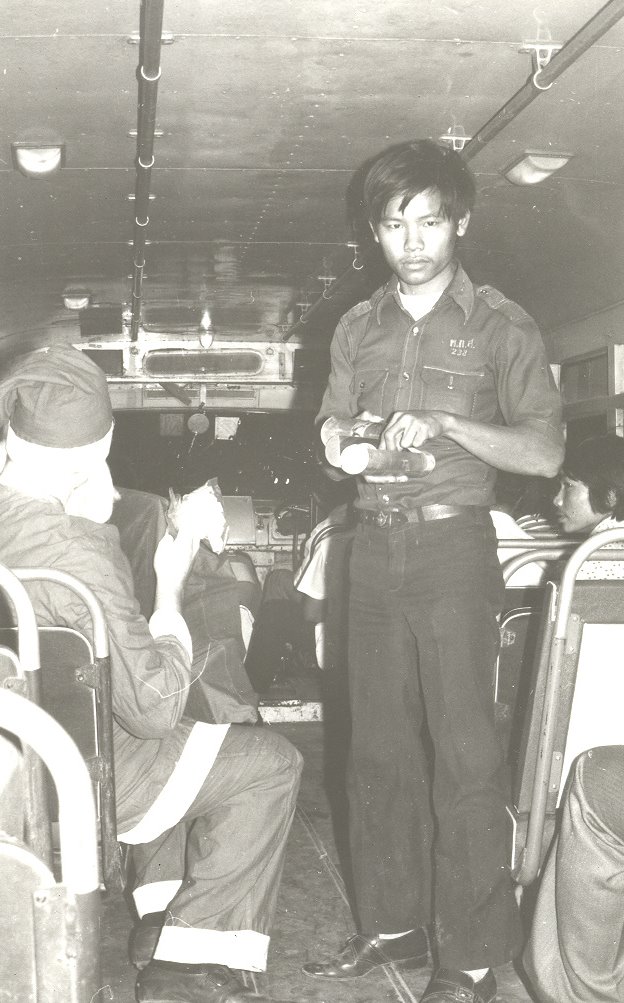
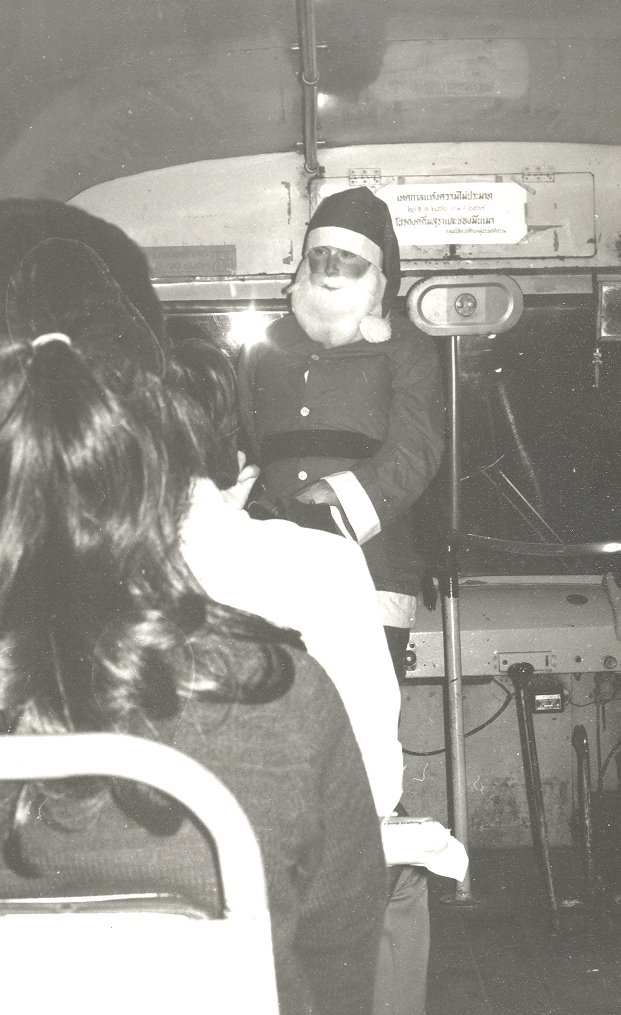
When we climbed aboard the battered city bus, silence fell like a dropped curtain. Passengers blinked. The driver froze. Even the conductor hesitated to collect our fare, gripping his metal collection cylinder like a shield.
Montgomery adjusted his camera strap and grinned. “Ready, Santa?”
“Ho ho ho!” I boomed.
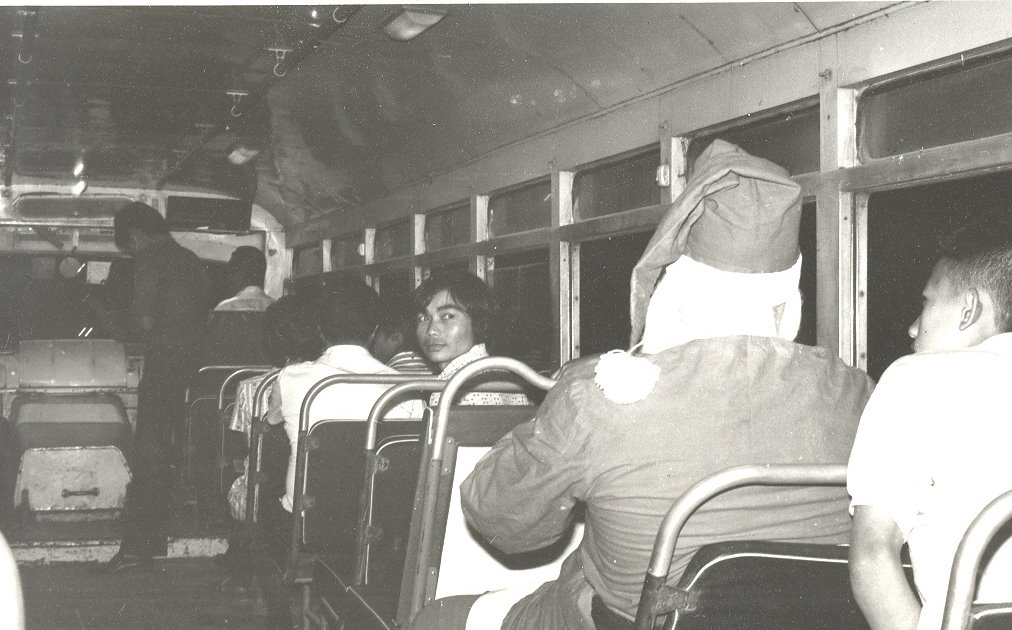
The bus lurched forward. Passengers scattered like startled birds, leaving us an island of empty seats.
“Khon nee krai kah?” a woman whispered. Who is this person?
Speaking in Thai, Santa asked,
“Which stop is closest to the canal, Khlong Bang Luang?”
The driver jolted upright. “P̄hū̂d p̣hā s̄ā thai?” He speaks Thai?
Laughter erupted. Directions were offered. And just like that, the curtain lifted.
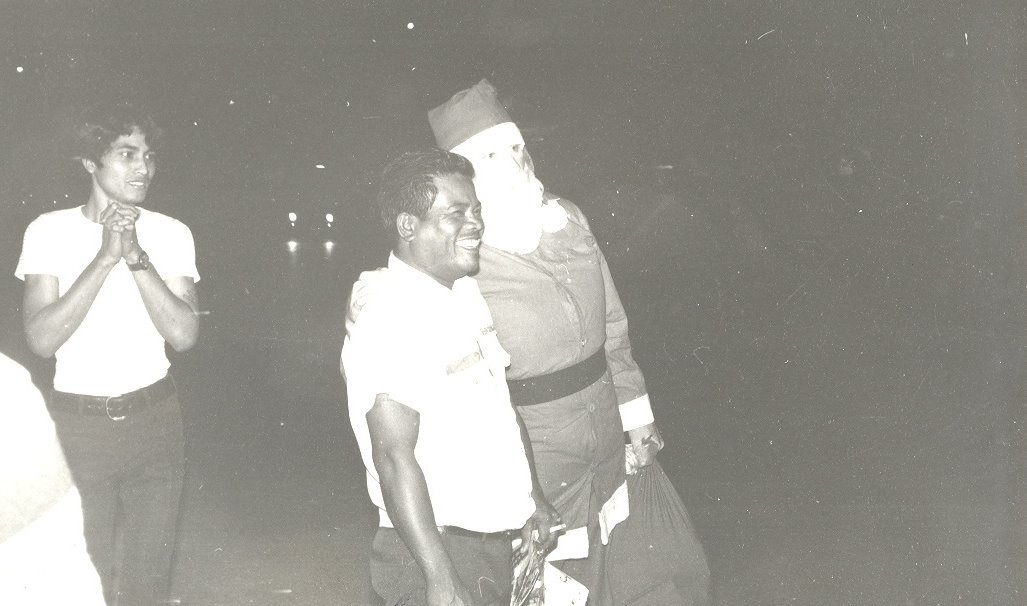
Beyond the bus stop, swamp shanties rose from the murky depths like half-forgotten dreams clinging to the edge of consciousness. Somewhere deeper in the reeds, a frog croaked—low and guttural, as if warning strangers not to linger. The place felt suspended in time: neither abandoned nor alive, just waiting.
“Careful,” Montgomery breathed as we stepped onto the floating walkway. One wrong move and we’d vanish into the black water below.
Under the cloak of darkness, we trudged along the slatted boardwalk that creaked like old bones over black swamp water. The air was thick with rot and woodsmoke. Shanties clung to stilts like survivors of a shipwreck, patched with tarps and scrap tin, glowing faintly from kerosene lanterns within. Torn mosquito nets flapped in the breeze. The scent of mildew lingered. Each home was a testament to stubborn hope floating above despair.
“This is it,” I whispered. “You ready?”
Montgomery nodded, snapping a few photos. “Let’s deliver some miracles.”
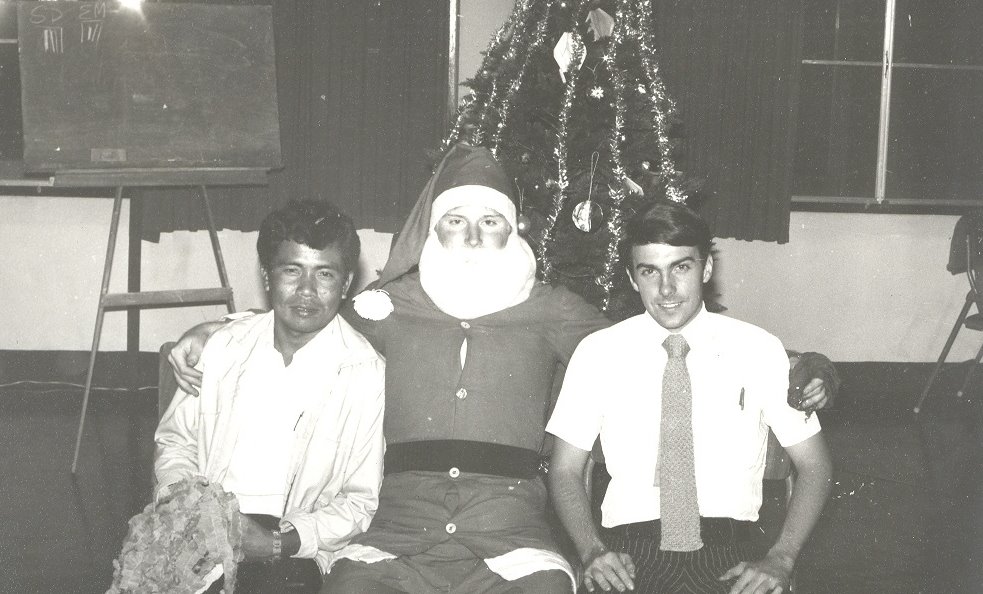
We crept to the first home, where shadows danced behind a canvas curtain. Children’s voices drifted from inside. On our knees, we crawled up wooden steps, gifts cradled like peace offerings. With steady hands, we placed our offerings just inside the threshold.
“Mee khrai yoo ban mai?” “Anyone home?” I called—then bolted.
Squeals erupted behind us—laughter, delight, the universal music of wonder. We repeated the ritual, house after house, disappearing each time before questions could be asked.
We melted back into the darkness, hearts pounding like jungle drums.
As we made our way back along the moonlit planks, eyes glinted from between the wobbly slats. Then a rustle. A thud. A flash of fur and fangs.
“What the—beavers?” Montgomery hissed, backing up.
“Too big. Those are—”
“—swamp rats. Giant ones.”
One lunged, baring oversized yellow teeth. Montgomery swatted it with the empty gift bag. I slipped. My foot sank through a rotted plank. The boardwalk groaned.
“Run!” I shouted.
We tore toward the bus stop, hearts racing, the empty sack flailing behind us. A night like no other—capped with rodent warfare and adrenaline.
By the time we collapsed into our tiny apartment, we were soaked in sweat, laughter, and something else—a feeling neither of us could name just yet.
That Christmas Eve, we gathered with other missionaries, passing around traditional jelly like Thai snacks and retelling the tale of the Santa who outran the rats. But later, lying on my bed in red pajamas, staring at the floor fan spinning lazily in the doorway, I kept circling back to the question that had lingered since we first stepped off that bus: Did we really make a difference? Or was it just self-prescribed foolishness in costume?
Montgomery developed our photos. In one frame, tiny hands clutched gifts while eyes sparkled with wonder—a universal language that transcended every divide.
Weeks later, I overheard a local woman tell another, “My children got a gift from a red spirit. They say he spoke like a monk and left without asking for anything.”
Saint Nicholas gave in secret. Jesus multiplied loaves for hungry crowds. Buddha taught compassion without condition.
That was it. No doctrine. No conversion. Just kindness.
And in that moment, the question was answered.
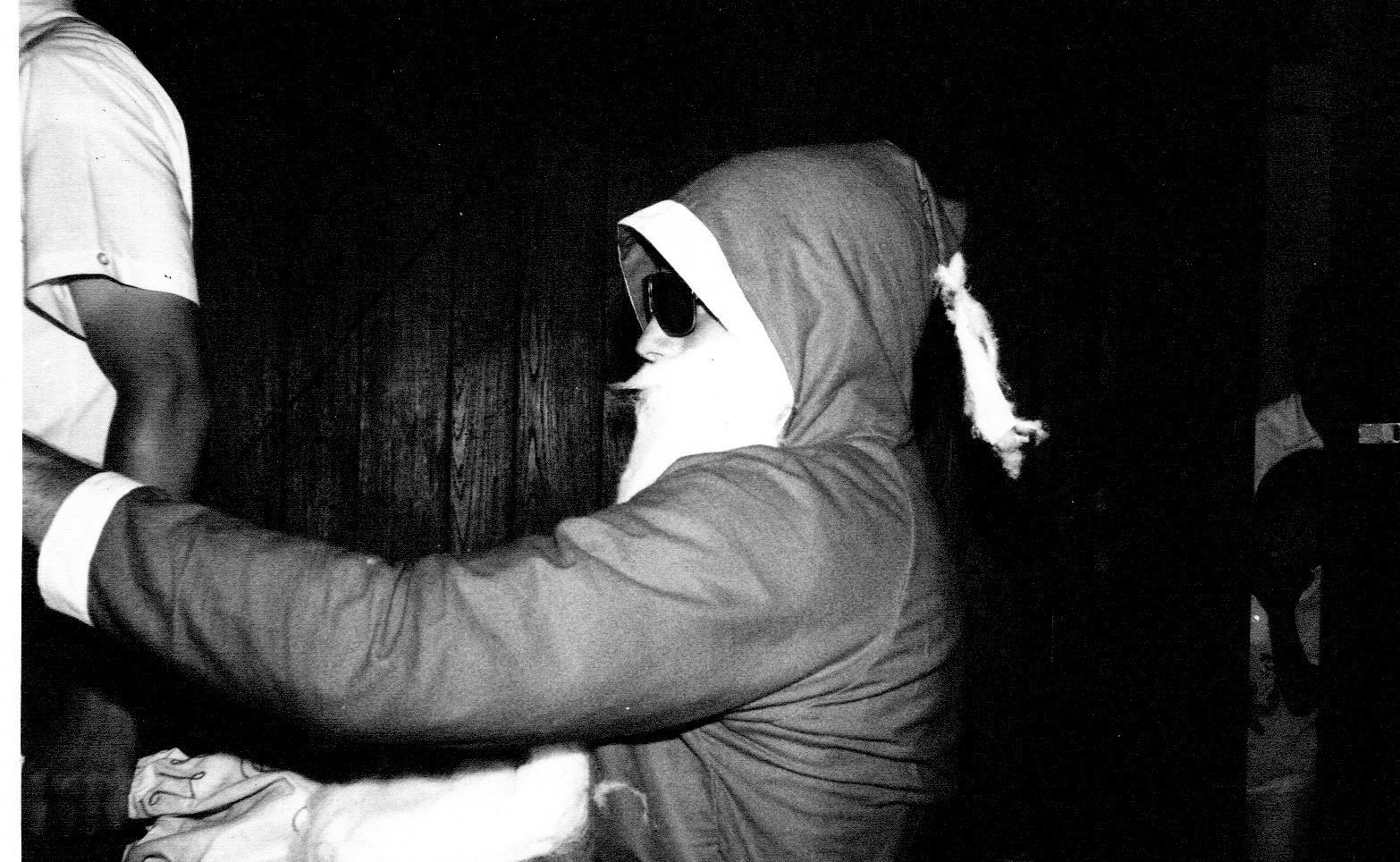
No, it wasn’t foolish. It was faith—worn like a costume, delivered through laughter, stitched with compassion. That night in the swamp, the red suit became our answer: sometimes the smallest acts of love don’t just cross canals—they build bridges. Bridges made of wonder and generosity, strong enough to stretch between faiths, firm enough to carry the weight of our shared humanity.
There in the swamp, three traditions flowed together like tributaries joining a mighty river. Buddhist families received Christian kindness, delivered through Western folklore—and somehow, mysteriously, beautifully, it all made perfect sense.
Under the flicker of lanterns and the hush of muddy water, something holy passed between us. No scripture spoken. Just the gospel of giving.